Presentation-Grade Showroom Floors: A Dealership Fleet That Pays Back in 20 Months
A composite case study: sizing autonomous scrubbers for a flagship car dealership's high-gloss showroom and service floors, and the real payback math from our Fleet & ROI engine.
By WhichBot Team
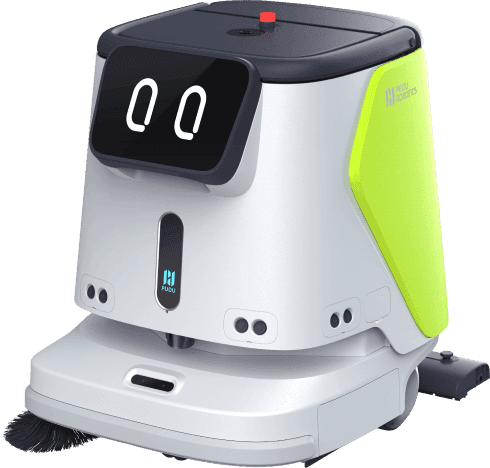
In a car dealership, the floor sells the car. A spotless, high-gloss showroom floor throws the overhead lighting back onto the paintwork — and Australian dealerships now scrub those floors daily to keep them mirror-clean. A flagship multi-franchise site asked us whether autonomous scrubbers could hold that presentation standard every morning without a growing nightly cleaning bill. We ran their showroom and service floors through the Fleet & ROI Planner and sized the fleet.
The brief
Polished-concrete and epoxy showroom floors, glossy tile in the customer lounge, and a busy service-centre floor tracking tyre marks and workshop grit — all of it has to look immaculate before the doors open. The dealership was paying a nightly contract crew to mop it by hand, and on busy weekends the finish slipped: streaks under the display lighting, dull patches where the mop water dried unevenly.
The scope we sized:
- ~4,000 m² of cleanable hard floor — 2,000 m² showroom display, 1,500 m² service centre, 500 m² reception, lounge and corridors
- Cleaned overnight in a 5-hour window, finished before the 8am open
- High-gloss surfaces that must be washed, not just swept, to hold reflectivity
- A customer-facing site where streaks and dull patches cost sales
That sets the machine class immediately: glossy, spill-prone hard floor is a job for a wet scrubber-dryer, not a dry sweeper.
The shortlist
Specs get you to a shortlist; operations pick the winner. We compared three autonomous scrubbers and sized each fleet to clear 4,000 m² inside the window.
| Model | Clean rate | Runtime | Indicative price | Best for |
|---|---|---|---|---|
| Pudu CC1 | 700–1,000 m²/h | ~5 h | ~A$30,100 | Presentation-grade hard floor, best value |
| Pudu CC1 Pro | 700–1,000 m²/h (spot 1,500–3,000) | ~5 h | ~A$32,800 | Larger / mixed floors that use spot mode |
| Gausium Phantas | 350–700 m²/h | ~4.5 h | ~A$44,600 | Quietest (~60 dB), tight complex layouts |
Each CC1 washes about 2,000 m² of floor per night — roughly 4 cleaning hours at its measured pace, inside the 5-hour battery and the overnight window on a single charge. Two units clear the 4,000 m², at 70 dB, using about 4 ml of water per m² versus ~100 for a mop and bucket — about 384 L less water a night, and a consistent wet-and-dry finish with no drying streaks.
Why the standard CC1 over its pricier siblings here? The CC1 Pro's fast spot mode is a genuine advantage on large, mixed floors — but a compact presentation floor doesn't use it, so you'd pay more for capacity you don't touch. The Gausium Phantas is the quietest machine in the class (~60 dB) and lovely in tight layouts, but its lower throughput means three units for this floor. On cost-per-effective-m², the plain CC1 wins.
Payback = upfront (robots + commissioning) ÷ the same monthly labour saved. The CC1 wins on cost-per-effective-m² for a compact presentation floor. Shorter is better.
The deployment
We map the site into zones and let one robot run the showroom-and-lounge loop, the other the service centre and corridors:
High-gloss showroom and lounge on one loop, service centre and corridors on the other — each robot returns to its own dock to refill and drain.
Three lessons carried over from every presentation-grade rollout we've seen:
- Gloss is about consistency, not horsepower. The robot's win isn't a deeper clean than a good manual crew — it's the same even, streak-free finish every single night, including the busy-weekend nights when the manual finish used to slip.
- Map around the cars, then re-map when they move. Display vehicles, pop-up promos and handover-bay layouts change weekly; a quick re-map keeps coverage from dropping around new obstacles.
- The crew moves to detail work. Cleaners stop mopping the concourse and pick up the glass, the display plinths and the customer-touch surfaces — the presentation details a scrubber can't do, and exactly where a showroom's first impression is made.
The numbers that matter
Two CC1 units (indicative ~A$30,100 each, ex-GST) plus mapping and commissioning came to about A$65,000. Against the nightly manual scrubbing they displace — net of robot supervision — that's a saving of roughly A$3,250/month, while holding the audited floor-gloss standard every morning.
Break-even at ~20.0 months on a $65,000 upfront outlay saving $3,250/month.
A$65,000 ÷ A$3,250/month lands break-even at 20 months — and that's before counting the sales value of a floor that never looks tired under the lights, which is the part the dealer principal actually cared about.
Would it work for your dealership?
The honest answer is "it depends on your floor area, your finish, and your opening hours" — which is exactly what the planner is for.
- Run your own site through the Fleet & ROI Planner to see the payback on your numbers.
- Or tell us about your showroom and we'll send a vendor-neutral shortlist with indicative pricing.
Frequently asked questions
- What kind of robot cleans a car dealership showroom floor?
- A wet scrubber-dryer. High-gloss polished-concrete, epoxy and tiled showroom floors need washing to restore reflectivity — the PUDU CC1 (a 4-in-1 sweep/vacuum/mop/scrub unit) is built for exactly that hard-floor job.
- How many cleaning robots does a flagship dealership need?
- For about 4,000 m² of showroom, service-centre and reception hard floor cleaned nightly, two PUDU CC1 scrubbers cover it — each washing roughly 2,000 m² in about 4 hours on one charge, inside a 5-hour overnight window.
- What's the payback on dealership cleaning robots?
- On indicative pricing, two CC1 units plus commissioning (~A$65,000) against about A$3,250/month of displaced overnight cleaning labour pays back in roughly 20 months.
- Are floor-scrubbing robots quiet and low-water enough for a showroom?
- The PUDU CC1 runs at about 70 dB and uses ~4 ml of water per m² versus roughly 100 ml for manual mopping — about 384 L less water a night across a 4,000 m² floor.
Put these numbers to work
See which robot fits your facility and what it would save you.
Run the Fleet & ROI Planner