The 4-Star Hotel That Scrubbed Its Lobby at 2pm — Chose Quiet Over Cheap
A composite case study: choosing an autonomous scrubber for a 180-room hotel where the floor is never empty. Why the quietest machine beat the fastest one, and the payback math behind it.
By WhichBot Team
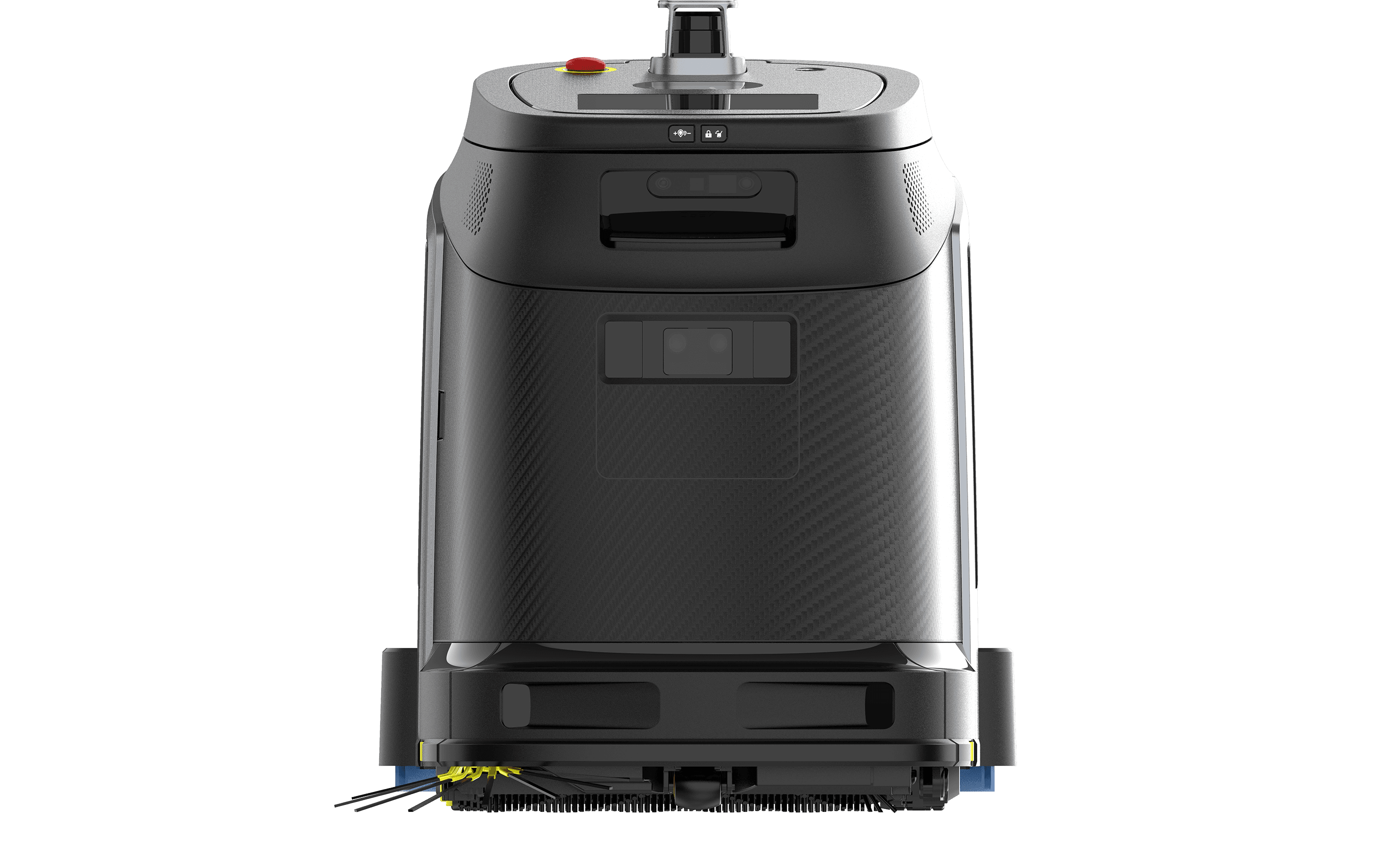
Most cleaning-robot business cases assume an empty building. A supermarket closes. A warehouse goes dark. A hotel does neither — the lobby has guests in it at 2am and at 2pm, and the floor still has to look like a 4-star floor at both times. That constraint changes which machine wins, and it changes it in a way the spec sheets actively hide.
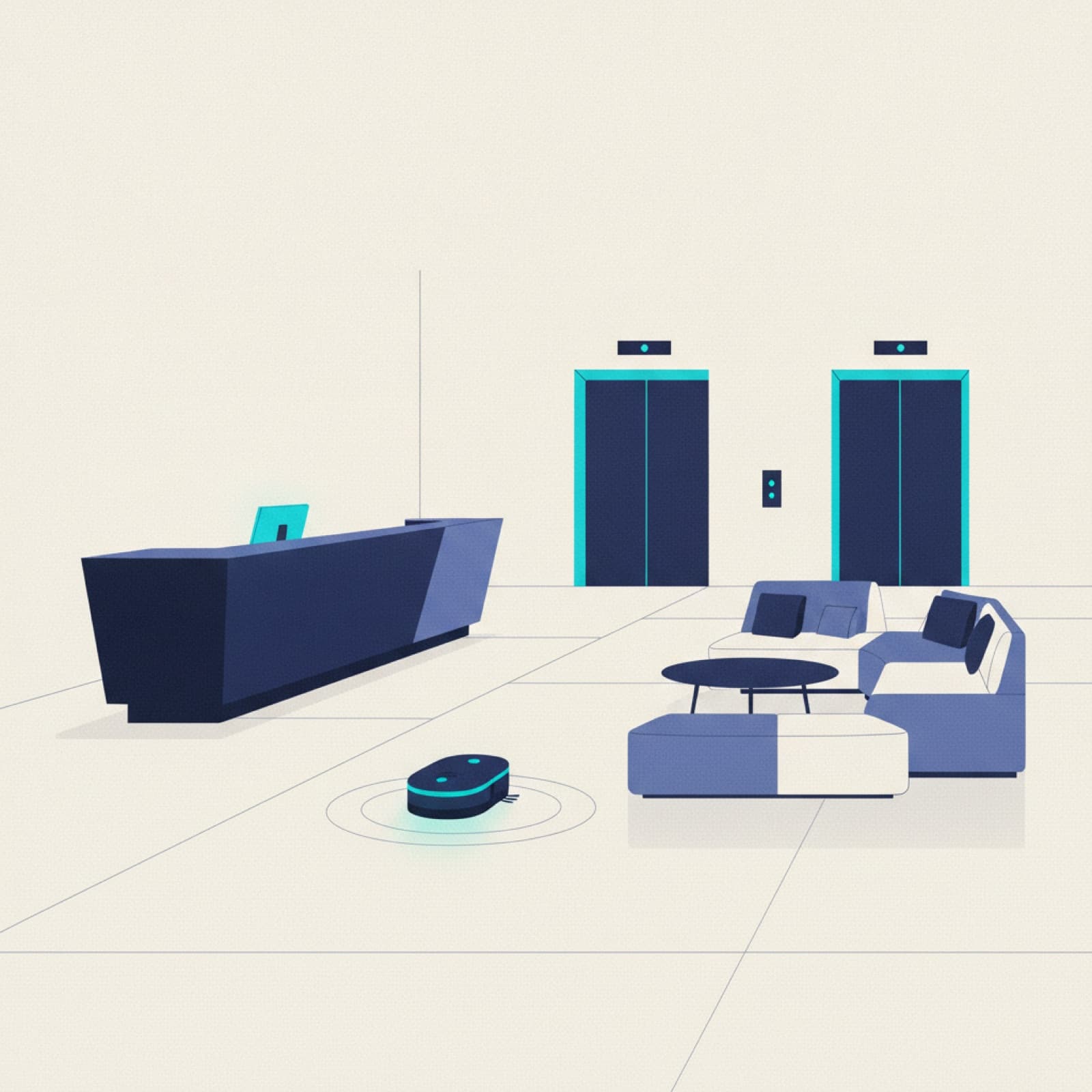
The brief
A 180-room, 4-star city hotel. The cleanable hard floor breaks down as roughly 1,400 m² of lobby and atrium, 900 m² of ground-floor F&B, 1,300 m² of lift lobbies and hard-floor corridor runs across eight levels, and 1,600 m² of back-of-house — kitchen pass, service corridors, loading dock, staff areas. About 5,200 m² in total.
The operating constraints were the whole problem:
- There is no closed window. The lobby and F&B are guest-facing roughly twenty hours a day. The genuinely empty slot is 1am–5am.
- Noise is a brand-standard issue, not a comfort issue. Anything audible from a guest room door or a lounge chair is a complaint.
- Corridors and BOH are narrow — often under 80 cm of clear width once housekeeping trolleys and linen bins are parked in them.
- The lobby is the most-photographed floor in the building and it looked tired by mid-afternoon. Night-only cleaning was not solving that.
Today the hotel spends about 9.0 labour-hours a day on hard floors. That buys spot-mopping, not full coverage — the back aisles of BOH and the far end of the atrium get skipped on busy days.
The shortlist
Four machines could plausibly do the work. Only one could do it at 2pm.
| Model | Rated coverage | Runtime | Min aisle | Noise | Indicative price | Verdict |
|---|---|---|---|---|---|---|
| Gausium Phantas | 350–700 m²/h | 4.5 h | 65 cm | 60 dB | ~A$44,600 | ✅ Chosen |
| Gausium Scrubber 50 Pro | 500–1,300 m²/h | 3 h | 80 cm | n/p | ~A$70,600 | Too wide for corridors |
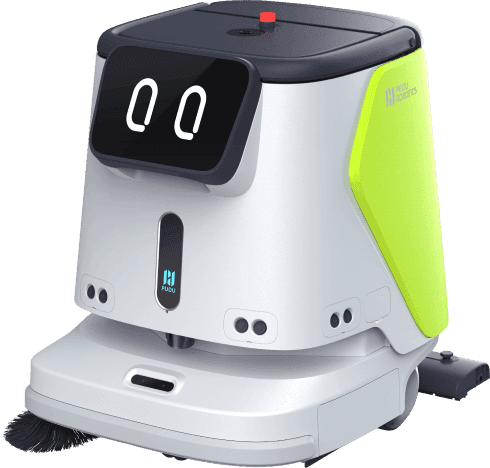
| PUDU CC1 | 700–1,000 m²/h | 5 h | 70 cm | 70 dB | ~A$30,100 | Night-only; too loud |
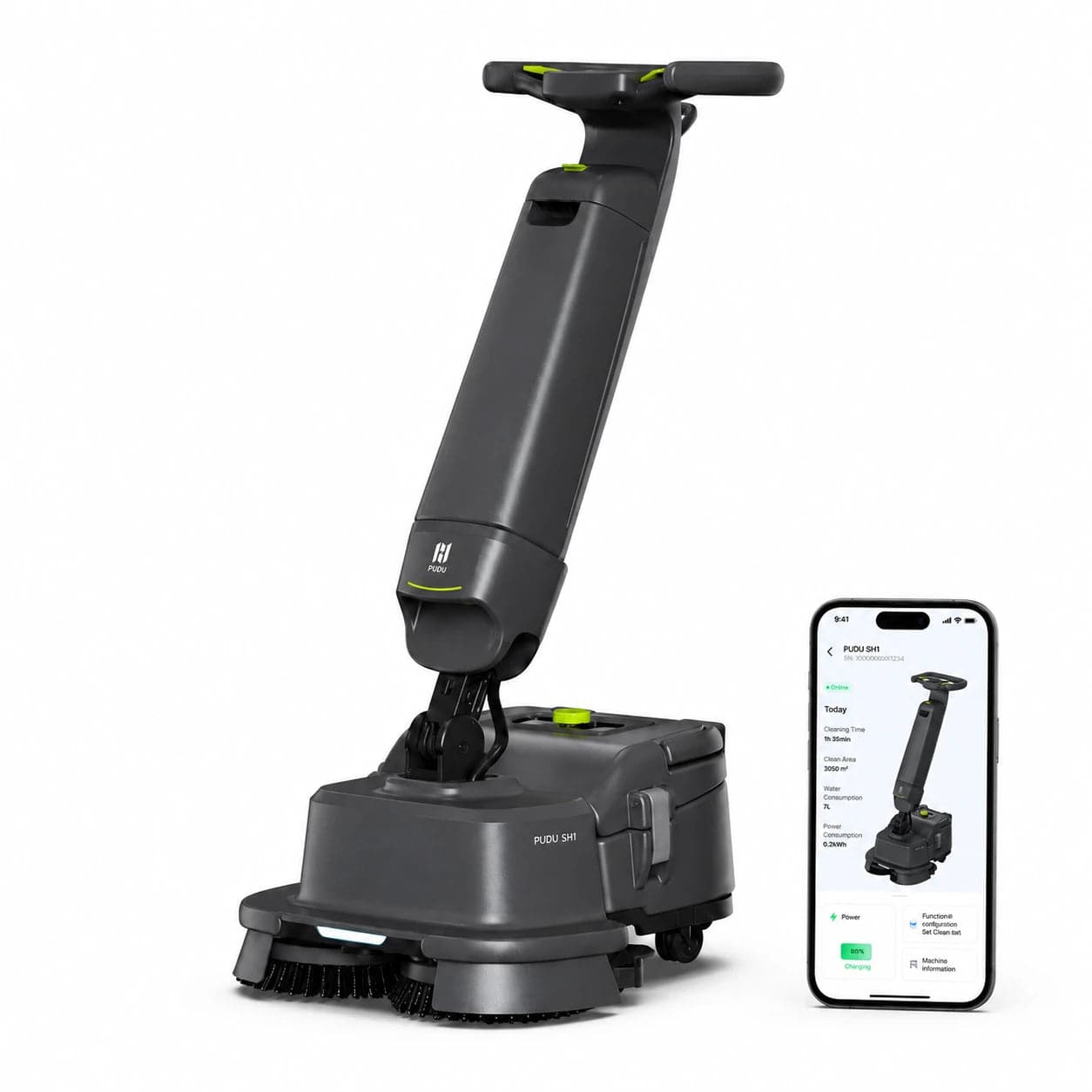
| PUDU SH1 | 1,100–1,600 m²/h | 1.2 h | — | 72 dB | ~A$5,200 | Operator-pushed, not autonomous |
Read that table the way a hotel has to read it. The fastest machine on paper is the SH1 — and it is not a robot at all. It is a compact upright that a person pushes. Its 1,100–1,600 m²/h is a human walking speed figure, and it displaces no labour, so it has no payback to speak of. The cheapest autonomous machine is the CC1, which is an excellent supermarket robot and the wrong hotel robot: at 70 dB it is confined to the 1am–5am window, which means the daytime lobby porter stays on the roster.
The Phantas wins on the two numbers nobody puts on a banner: 60 dB and 65 cm. Quiet enough to run the atrium during afternoon tea, narrow enough to thread a corridor with a linen trolley in it.
Sizing the fleet
At a realistic ~420 m²/h effective rate — the conservative end of the rated band, after edge work, docking and re-routing around guests — covering 4,050 m² a day takes about 9.6 machine-hours. One Phantas has 4.5 hours of runtime. So the answer is two robots, each running a night block and a day block with a charge in between.
That 4,050 m² is 78% of the hotel's 5,200 m² of hard floor. The remaining 22% — the galley behind the bar, the stairwells, the tight corner of the loading dock — stays manual, and always will. Any vendor promising 100% robot reach in a hotel is selling you a floor plan they have not walked.
Payback = upfront cost ÷ net monthly saving. The cheap CC1 pays back fastest — but at 70 dB it's night-only. The Scrubber 50 Pro can't enter the 80 cm corridors, so it pays back on the lobby alone — the worst of the three. The chosen Phantas pays back slower than the CC1 and still won, because it's the only one that's quiet AND covers everything.
The money
Two Phantas units at roughly A$44,600 each come to A$89,200, plus about A$3,720 for mapping and plumbing the refill/drain workstation into a BOH floor drain — A$92,900 all-in.
On the labour side, the hard-floor roster falls from 9.0 hours a day to 4.7: the robots displace about 5.5 hours, and add back roughly 1.2 hours of tending, exception-clearing and edge detailing. At a blended loaded rate of about A$34/h across day and night penalty rates, that is A$4,445 a month gross. Subtract about A$545 a month for power, brushes, squeegees and service across two machines and you land on a net A$3,900 a month.
A$92,900 upfront ÷ A$3,900 net monthly saving. Break-even lands at month 24.
What the model missed
Three things showed up in operation that no spreadsheet predicted.
-
The daytime run was the point. The business case was built on displaced night hours. What management actually valued was the atrium being scrubbed at 2pm without a single guest looking up — the lobby stopped looking tired by mid-afternoon. That is a brand-standard outcome, and it is the reason the quiet machine beat the cheap one despite an eight-month worse payback on paper.
-
Water use collapsed. PUDU's own fleet telemetry for the CC1 shows around 4 ml/m² against roughly 100 ml/m² for manual mopping. The Phantas is a different machine, but the order of magnitude holds across autonomous scrubber-dryers: they meter water, humans slosh it. Fewer chemical drums, fewer wet-floor signs, fewer slip incidents.
-
Trolleys are the real obstacle course. Mapping day is a fiction — it captures a corridor no housekeeper has parked in yet. The fleet's exception rate halved once housekeeping agreed on two trolley bays per floor. The robot did not need to get smarter; the floor needed a rule.
Would it work for your property?
Hotels are the hardest cleaning-robot case to model, because the binding constraint is almost never coverage — it is noise, aisle width, and a window that does not exist. The machine that wins is rarely the one at the top of the spec sheet.
- Run your own property through the Fleet & ROI Planner to see the payback on your floor area, your windows, and your wage rates.
- Or tell us about your site and we'll send a vendor-neutral shortlist with indicative pricing.
Put these numbers to work
See which robot fits your facility and what it would save you.
Run the Fleet & ROI Planner