The Shift You Can't Fill: Why Robot Payback Fell From 27 Months to 20
On the wage path we model, Australian overnight cleaning labour reprices roughly 32% in five years. Same robots, same floor, same hours — payback drops from 27 months to 20. Here's the arithmetic, and what it means for when you buy.
By WhichBot Team
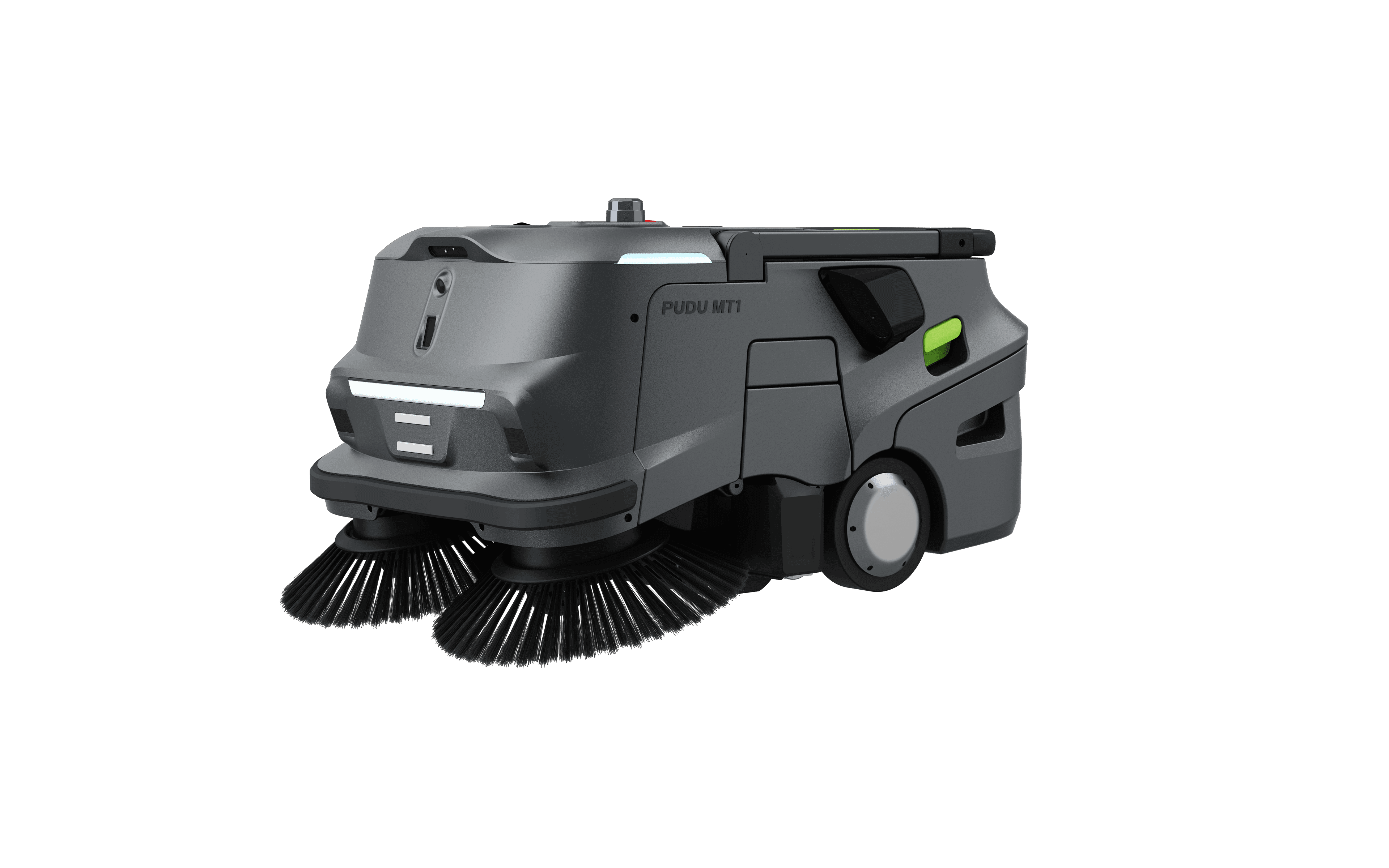
The number that decides whether a cleaning robot is worth buying isn't the robot's price. It's the hourly cost of the shift it replaces — and on the wage path we model, that number has moved about 32% in five years while the machine's price tag sat still. On the composite site below, two PUDU MT1 dry sweepers would have paid back in 27 months at 2021 labour rates. On 2026 rates, the identical fleet on the identical floor pays back in 20.
Illustrative scenario. The site, the wage path and the hours below are a composite built from our Fleet & ROI engine and ordinary industry benchmarks, not a specific named customer or a published dataset. Figures are representative, not a guarantee.
The shift nobody wants to work
Overnight cleaning is one of the hardest ordinary shifts in Australian facilities to staff, and it has been getting harder. It is casual, it is unsociable, it is often outside public-transport hours, and in regional and outer-metro sites the pool of people willing to do it is thin enough that a single resignation becomes an operational problem.
The market has responded the only way it can — by paying more. The base award rate rises each July; on top of it sit casual loading, shift and overnight loadings, compulsory superannuation on its legislated path, leave and workers' compensation. Regional and overnight hours then carry their own premium on top of that. Stack it up and the fully-loaded cost of an overnight cleaning hour looks like this:
The modelled path: about A$2 a year, or 5.8% compounding — award increases plus loadings, super and on-costs. This is the scenario we plan against, not a published series. Your own number is the one that matters, and it is the single most powerful input in any robot business case.
Note what that curve does to a business case. Every other input — the machine, the mapping, the charge piles — is fixed in nominal dollars on the day you sign. The saving is denominated in something that reprices every year.
Payback has a moving denominator
Payback is upfront cost ÷ monthly saving. Nobody argues about the numerator. The denominator is where the wage market lives, so here is a concrete floor to hang it on.
The site is an 11,000 m² regional bulky-goods retail building — sealed concrete, wide aisles, dry soil. What comes in off the floor is packaging fines, grit and car-park dust, not spills, so this is sweeping work rather than scrubbing. About 10% of the building sits under stock and display plinths that no robot will reach, leaving 9,900 m² of robot-reachable floor. The store trades until early evening and the crew has a clear six-hour window, six nights a week.
Today one casual sweeps for four hours a night. At the 500 m²/h hand-sweep rate we hold every manual comparison to, that is about 2,000 m² — a fifth of the floor. The rest doesn't get skipped because anyone decided to skip it. It gets skipped because the second person on that roster was never hired.
The shortlist
Four dry machines were credible. Every rate below is the manufacturer's rated coverage put through the same derate — 0.6 for a practical published figure, 0.45 where the vendor publishes a theoretical maximum — so nobody is compared on a friendlier basis than anyone else.
| Model | Type | Rate (spec → derated) | Runtime | Unit price | Fleet & capex |
|---|---|---|---|---|---|
| PUDU MT1 | Dry sweeper | 1,800 → 1,080 m²/h | ~6 h | ~A$25,992 | 2 units · A$51,984 |
| PUDU MT1 Max | Dry sweeper | 2,200 → 1,320 m²/h | ~7 h | ~A$39,218 | 2 units · A$78,436 |
| Gausium Beetle Pro | Dry sweeper | 3,240* → 1,458 m²/h | ~5 h | ~A$42,680 | 2 units · A$85,360 |
| CenoBots SP50** | Dry sweep + vacuum | 1,987 → 1,192 m²/h | ~8 h | ~A$44,688 | 2 units · A$89,376 |
*published as a theoretical maximum, so it takes the tighter 0.45 derate. **specs unconfirmed in our catalogue and availability is currently limited — treat the row as indicative.
One note on the prices, because they aren't built the same way. The MT1 and the SP50 are US list figures converted at an indicative rate and cut 10%. The MT1 Max has no US listing, so it comes off an Australian distributor card plus 5%. The Beetle Pro comes from a retailer whose base configurations run about 20% under that footing, so we level it up 20% first — an adjustment that only ever moves a Gausium price upward. Both of those adjustments raise a rival of the machine we end up recommending, so read gaps of a few percent as ties: level everything to the plain converted-list basis and the nearest rival becomes the Beetle Pro at about A$71,100 a pair, not the MT1 Max.
All four size to two units on this floor — the window, not the machine, is what sets the fleet — so the decision collapses to capex, and the MT1 takes it by about A$19,000–A$26,000 over its nearest rival, depending on which price basis you level to. One caveat worth stating plainly: the MT1 is rated IPX3 — a water-spray rating whose dust digit PUDU simply hasn't specified, against all, against the MT1 Max's IP54, which does. On a sealed indoor retail floor that gap is unlikely to bite — but it is an unrated dimension, not a passed test. Put the same fleet in a shed with airborne dust and the IP rating becomes the tie-breaker, and the cheaper machine stops being the right one.
After the derate and the engine's 15% in-window duty allowance, one MT1 works at about 918 m²/h, or 5,508 m² across the six-hour night. Two units cover 11,016 m² against 9,900 m² of demand — roughly 4,950 m² each, about 5.4 hours of cleaning inside a ~6-hour battery. No mid-pass recharge, and a little headroom for a bad night.
The money
Two units at ~A$25,992, plus mapping, commissioning and installing two charge piles at about A$3,200 — our own deployment assumption, not a catalogue figure — comes to roughly A$55,184.
The baseline it displaces is deliberately conservative. We credit only the four hours actually worked tonight — not the notional 20 hours it would take to hand-sweep all 9,900 m² — and we charge the full supervision rate in our fleet assumptions, 8 minutes per robot cleaning hour. At 5.4 cleaning hours a machine that is about 43 minutes each, or 1.44 hours a night across the fleet. So the displaced labour is 2.56 hours a night, 26 nights a month: 66.6 hours. At A$41 fully loaded, A$2,731 a month — while the audited floor goes from 2,000 m² a night to 9,900.
Break-even at ~20.2 months on A$55,184 upfront saving A$2,731/month. The 7,900 m² a night that nobody was cleaning before is upside we left out entirely.
The same fleet, four wage rates
Now hold everything constant — the two robots, the 9,900 m², the 66.6 displaced hours a month — and move only the hourly rate:
Shorter is better. Nothing here is a robot improvement — the machines, the floor and the hours are identical in every bar. Only the price of an hour of human night work changes.
What this actually changes
- Re-run a business case that failed two years ago. This site penciled at 23 months on 2024's A$36/hr. It is a 20-month site now, and the file in the drawer still says 23. The arithmetic moved underneath it.
- Waiting has a price. Deferring a year to see whether hardware gets cheaper costs you a year of the largest saving the machine will ever generate, at the rate you were trying to avoid paying. A price cut has to beat that.
- Model the wage path, not today's rate. Payback quoted on a static hourly figure understates the back half of the amortisation. If you can't defend a growth assumption, run it flat and treat the difference as margin.
The honest caveat runs the other way too: consumables, service and the odd replacement battery aren't free, and a fleet that can't reach the floor doesn't save anything no matter what the wage rate does. Reachable area first, wage rate second.
Work it out on your numbers
Your floor, your window and your wage rate are the whole answer — which is exactly what the planner is for.
- Run your site through the Fleet & ROI Planner with your own fully-loaded hourly rate and see where payback lands.
- Or tell us about your site and we'll send a vendor-neutral shortlist with indicative pricing.
Frequently asked questions
- Does wage inflation change the payback period on a cleaning robot?
- Directly, because payback is upfront cost divided by the labour it displaces each month. In the worked example below, a two-unit PUDU MT1 fleet costing about A$55,184 installed pays back in roughly 27 months at a fully-loaded A$31/hr and about 20 months at A$41/hr — same robots, same floor, same displaced hours. The capital number is fixed on the day you buy; the labour number reprices every July.
- What does a fully-loaded overnight cleaning hour cost in Australia?
- More than the award base rate suggests. On top of the base you carry casual loading, shift and overnight loadings, compulsory superannuation, leave and workers' compensation — and we assume regional or overnight work carries a 10–30% premium over a standard metropolitan daytime hour. We model A$41 an hour fully loaded for a regional overnight cleaning shift in 2026.
- Which cleaning robot suits a dry hard-floor retail site?
- A dry sweeper, not a scrubber. On sealed concrete carrying packaging fines, grit and dust rather than spills, there is nothing to wash, and running a wet machine over dry debris just clogs the recovery path. The PUDU MT1 is the sweeper we size these floors with, at a spec-derated 1,080 m²/h.
- How many robots does 9,900 m² need in a six-hour cleaning window?
- Two PUDU MT1 units. On the uniform basis we apply to every brand — rated coverage × a 0.6 real-world derate, then a further 15% off for docking and zone transitions — an MT1 works at about 918 m²/h in-window, or 5,508 m² per unit across a six-hour night. Two units cover 11,016 m² against 9,900 m² of demand.
- Should I wait for cleaning-robot prices to fall before buying?
- Waiting has a running cost. The saving a robot generates is denominated in labour hours, and those hours get more expensive each year, so every year you defer is a year of the largest saving you will ever have forgone. A price cut has to beat the wage increase you paid while waiting for it.
Put these numbers to work
See which robot fits your facility and what it would save you.
Run the Fleet & ROI Planner