LiDAR vs Visual SLAM: How Cleaning Robots Actually Find Their Way
The navigation stack decides whether a cleaning robot is reliable or a babysitting job. A plain-English guide to LiDAR, visual SLAM, and why the best machines fuse both.
By WhichBot Team
Two cleaning robots with identical cleaning hardware can have wildly different real-world reliability, and the reason is almost never the brushes — it's the navigation stack. Whether a machine cleans unattended or becomes a nightly babysitting job comes down to how it builds a map and keeps track of where it is.
The two ways a robot sees
LiDAR spins a laser to measure exact distances and build a geometric map. It doesn't care about lighting, so it's superb overnight and on long straight aisles — but glass walls and long, featureless corridors (everything looks the same) can confuse it.
Visual SLAM uses cameras to recognise visual features and track motion against them. It thrives in textured, detail-rich spaces — but it needs light, and struggles in the dark or against blank walls.
| LiDAR | Visual SLAM | Fused (LiDAR + vision) | |
|---|---|---|---|
| Works in the dark | ✅ | ❌ | ✅ |
| Handles glass walls | ⚠️ | ✅ | ✅ |
| Long featureless runs | ⚠️ | ✅ | ✅ |
| Hardware cost | Higher | Lower | Highest |
| Reliability | Good | Good | Best |
Why the good robots fuse both
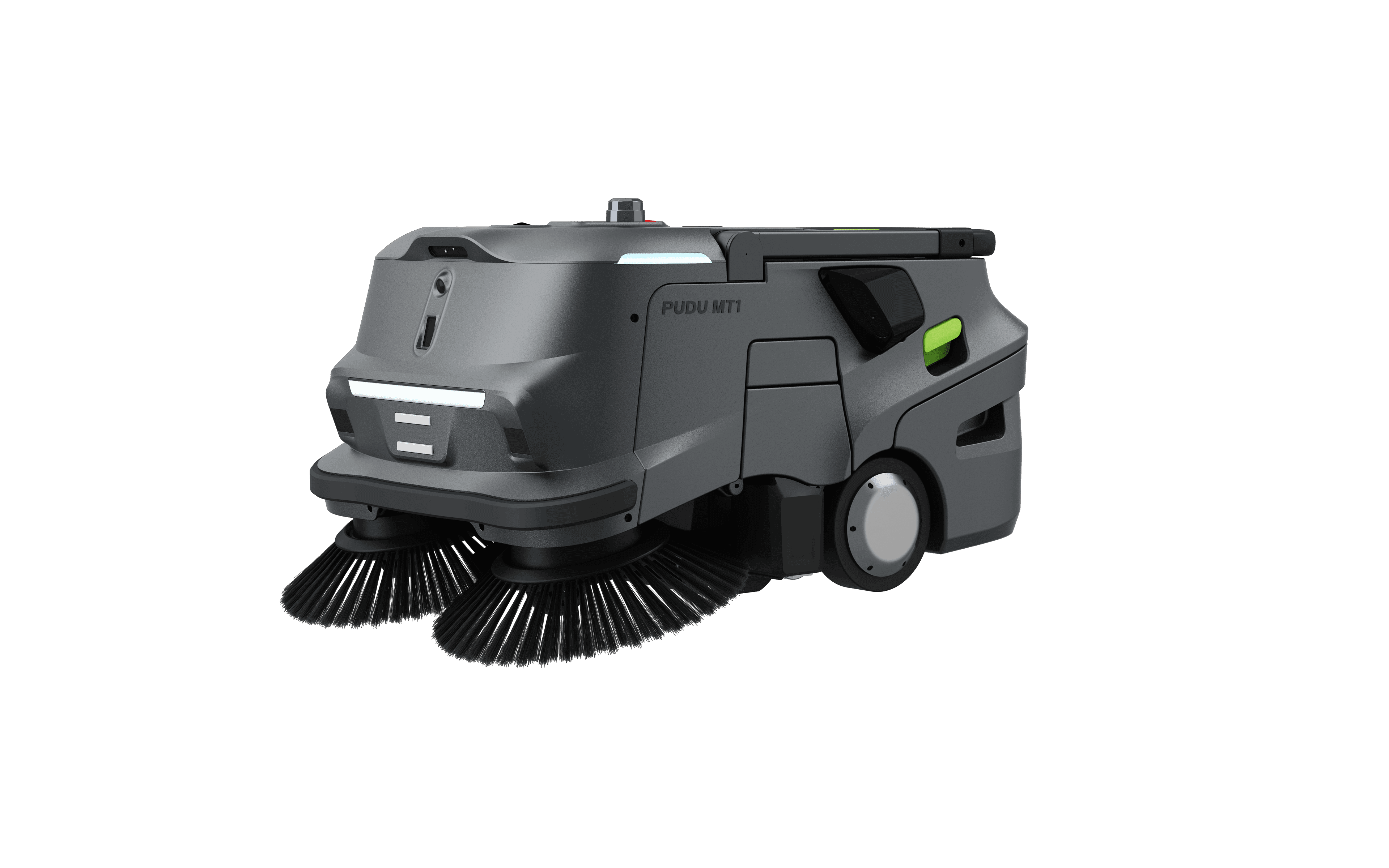
Each sensor's weakness is the other's strength, so serious commercial machines carry both — our catalogue records the PUDU MT1 as LiDAR + VSLAM. On a glass-walled concourse in the dark, LiDAR keeps the geometry while vision anchors on the few features that exist; neither alone would hold the line. (Exactly how a robot fuses the two is a vendor-specific detail worth asking about.)
The navigation pipeline, end to end
Reliability isn't one trick — it's a chain, and the weakest link is where robots get "lost":
- MapBuild/refresh the floor map
- LocaliseMatch sensors to the map
- PlanRoute the cleaning coverage
- CleanFollow the route, avoid people
- RecoverRe-localise after a blockage
What to ask a vendor
Skip "does it have LiDAR" and ask the questions that predict reliability:
- Does it fuse LiDAR and vision, or rely on one?
- How does it recover when it loses localisation — automatically, or does it stop and wait for a human?
- How hard is re-mapping when we rearrange the floor?
Those three answers tell you whether you're buying an autonomous machine or a remote-control one with extra steps.
- Compare models on the specs that matter in the robot catalogue.
- Or tell us about your site for a vendor-neutral shortlist.
Frequently asked questions
- What's the difference between LiDAR and visual SLAM in cleaning robots?
- LiDAR uses laser range-finding to build a precise geometric map and is excellent in the dark and on long straight runs. Visual SLAM uses cameras to recognise features and is better at rich, changing, textured scenes. LiDAR struggles with glass and sameness; vision struggles in low light — so the best robots fuse both.
- Which navigation type is more reliable for commercial cleaning?
- Combining LiDAR with vision is the most reliable approach, because each covers the other's failure mode. A stack that carries both — our catalogue records the PUDU MT1 as LiDAR + VSLAM — is what holds localisation on a glass-walled concourse in the dark, where either sensor alone would drift. How tightly a given robot fuses the two is a vendor question.
- Why does a cleaning robot get 'lost'?
- It loses localisation — it can't match what it senses to its map. Common causes are featureless corridors, glass walls that confuse LiDAR, low light that blinds cameras, or a map gone stale after the floor was rearranged. Fusion and regular re-mapping prevent most of it.
- Do I need to re-map when the floor layout changes?
- Yes. Navigation is only as good as the map. Moved racking, a new display or a seasonal layout can strand a robot on a stale map, so treat re-mapping as a recurring operational task, not a one-time setup.
Put these numbers to work
See which robot fits your facility and what it would save you.
Run the Fleet & ROI Planner