How a Shopping Centre Cleaned 12,000 m² of Concourse During Trading Hours
A composite case study: running autonomous scrubbers through a busy mall in daylight on a uniform spec-derated basis, the zones that decided the fleet, and a 16-month payback.
By WhichBot Team
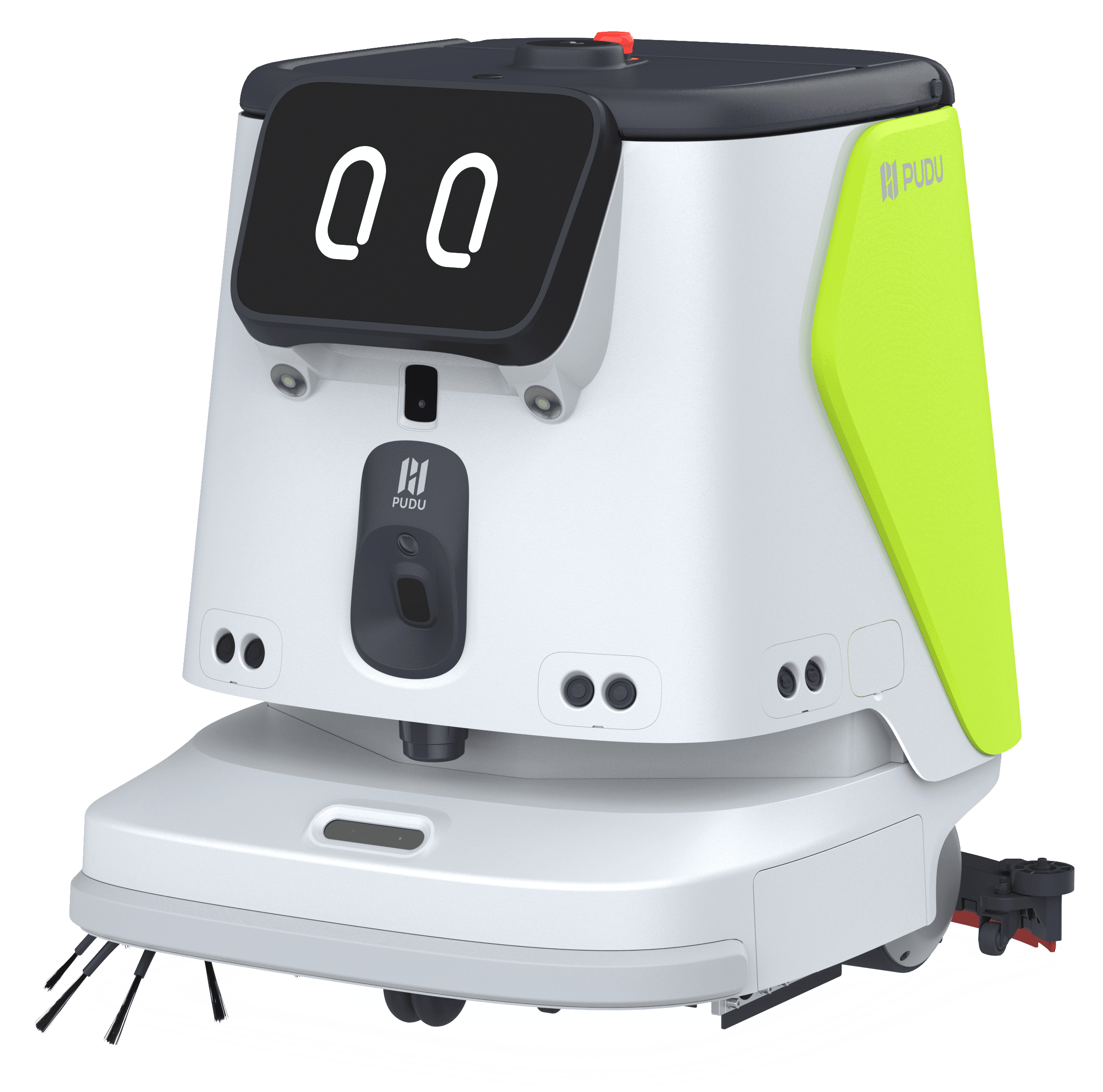
A shopping centre can't wait until midnight to clean — spills happen at 2pm, and a concourse that looks tired at lunchtime costs foot traffic. The challenge isn't overnight throughput; it's cleaning 12,000 m² of common area safely, in daylight, around thousands of shoppers. We built the plan around four PUDU CC1 Pro scrubbers running continuous passes.
The brief
Cleaning had to move from a nightly event to a continuous background service — without becoming a hazard or an eyesore during trading.
- ~12,000 m² of polished concourse, food court and mall spine
- Runs all day around the public — low-speed operation and reliable avoidance are non-negotiable
- Hot zones (food court) need multiple passes; back corridors need one
- Must dock and refill discreetly, off the shopper's sightline
Where the passes should land
Not every zone needs the same attention. Mapping foot-traffic against the floor showed where continuous passes actually pay off:
Routes weighted to foot traffic — the food court gets four passes a day, everywhere else one. Zone percentages are representative, not audit data. The robots freshen the busy zones without a human standing over a mop at noon.
Common area only: the mall spine, centre court, food court and side malls. Tenancy floors belong to the retailers, and escalators and stairs are outside a wheeled machine's reach — so they stay on the manual round while the robots hold the concourse between passes.
The shortlist
We size every machine the same way: manufacturer spec figure (midpoint where a range is published) × a derate × an 85% in-window duty allowance covering docking, water refill/drain and zone transitions. No brand gets a friendlier basis than its own spec sheet earns, and no brand's fleet telemetry is used on its own row. One disclosure, because it is our number: the 0.6 derate is calibrated from measured PUDU fleet data (output ÷ spec averages 0.59 across five PUDU models with confirmed specs, rounded to 0.6 — a sixth, the BG1, sits at 0.20 on a thin sample and an unconfirmed sheet and is excluded, which moves the derate in our recommendation's favour) and then applied to every brand identically.
The daily workload here isn't one pass over the floor. It's ~15,900 m² of scrubbing a day — the 12,000 m² concourse once, plus three extra passes over the ~1,300 m² food court — across a 14-hour operating day that starts before the doors open. That day length is our assumption and it sets the fleet: at 12 hours it is still four machines, at 10 hours it becomes five. We treat the whole 12,000 m² as robot-reachable — escalators, stairs and tenancy floors sit outside that figure, not inside it. The shortlist is the catalogue's compact daytime scrubbers; ride-on and large-deck machines are out for a trading concourse. Prices are indicative Australian retail, ex-GST.
| Model | Effective coverage | Units for the day | Noise | Indicative price | Fleet cost / year** |
|---|---|---|---|---|---|
| PUDU CC1 Pro | ~434 m²/h* | 4 | ~70 dB | ~A$32,800 | ~A$26,300 |
| PUDU CC1 | ~434 m²/h* | 4 | ~70 dB | ~A$30,100 | ~A$24,100 |
| Gausium Phantas | ~268 m²/h | 6 | ~60 dB (quieter) | ~A$44,600 | ~A$89,200 |
* The CC1 and CC1 Pro publish the same cover-mode range (700–1,000 m²/h), so on our uniform basis their throughput is identical and they size identically — we cannot rank them on speed, and we don't. The CC1 is the cheaper machine, by ~A$10,900 across a four-unit fleet. What the Pro adds is a Spot Cleaning mode its sheet rates at 1,500–3,000 m²/h, which the uniform cover-mode basis doesn't credit. In a centre that has to answer a spill at 2pm without running a full pass, that mode is the thing being bought — not speed. On a site that cleans to a schedule rather than to incidents, take the CC1 and keep the A$10,900.
** Hardware capital spread over the service life our planner assumes per brand — five years for PUDU, three for Gausium. That is our planning assumption, not a published vendor warranty, and it is the biggest lever in the column: levelled at a common five years the Phantas reads ~A$53,500, not ~A$89,200. Every price is an estimate, not a quote — all three are US retail listings converted at an indicative FX rate and cut 10%, the same adjustment on each.
The Phantas is the genuine trade-up for noise at ~60 dB against the PUDU pair's ~70 dB, and in premium retail that may decide it. It costs six units to the PUDU four, because its published range is lower.
The money
Four CC1 Pro units at A$32,832 each is A$131,328, plus about A$5,000 of mapping and dock plumbing — our own deployment assumption, not a catalogue figure — for ~A$136,300 upfront. Against it:
- Before: two daytime cleaners × 8 h = 16 crew-hours a day
- After: one rostered operator on an 8-hour shift covering the trading peak — about 4.9 hours of that is exception handling (the fleet spends ~36.7 robot-hours scrubbing, at our published eight exception-minutes per robot cleaning hour), and the balance covers escalators, tenancy thresholds and the manual detail no wheeled machine reaches
- Net saving 8 crew-hours a day, at A$35/h fully loaded across a seven-day trading week (~30 days a month) ≈ A$8,400 a month
Two things to be explicit about, because both move the answer. The before-case is a roster figure — two cleaners on a day shift — not the planner's 400 m²/h mop rate, which would put a full manual round far higher and make the saving look bigger. And the after-case is an 8-hour shift against a 14-hour robot day: the fleet runs its pre-open and late passes without a dedicated operator beside it. If your centre needs a person present for all 14 hours, the net saving is 2 crew-hours a day and the payback is nearer 65 months than 16.
Break-even at about 16 months on ~A$136,300 upfront against ~A$8,400 a month of displaced labour.
The payback captures labour. It misses the reason centre managers actually sign off: a concourse that is always presentable, not just clean at 6am and tired by lunch — which is the version shoppers see. We put no dollar on that, and neither should a business case that has to survive a CFO.
Would it work for your centre?
- Size it for your common area with the Fleet & ROI Planner — enter your daily scrubbed area (here 15,900 m², not 12,000) and set reach to 100%, since the planner sizes one pass at a 90% default.
- Or tell us about your site for a vendor-neutral shortlist.
Frequently asked questions
- Can cleaning robots run safely in a mall during trading hours?
- They are built for it. Our catalogue records the PUDU range as LiDAR + VSLAM navigation with 3D obstacle avoidance, and the CC1 Pro runs from 0.2 m/s, so it can work common areas in daylight rather than only after close. In this composite an operator was rostered across the trading peak; the pre-open and late passes ran without a person beside the machine. Treat crowd behaviour as a commissioning question for your own site, not a spec-sheet guarantee.
- How many scrubbers does a shopping centre concourse need?
- In this composite, four PUDU CC1 Pro units maintained ~12,000 m² of common area across a 14-hour operating day, running rolling passes so the food court was freshened three extra times — about 15,900 m² of scrubbing a day in total. On the uniform spec-derated basis we size every brand on, a CC1 Pro plans at about 434 m²/h in-window.
- What's the payback on cleaning robots for a shopping centre?
- About 16 months here: ~A$136,300 upfront for four units plus mapping, against ~A$8,400 a month in displaced daytime cleaning labour — a two-person day round becoming one operator. The presentation value of a constantly-clean concourse carries no dollar in that model.
- Do daytime cleaning robots disrupt shoppers?
- Handled well, no — they run from 0.2 m/s, reroute around obstacles, and cover a zone in minutes. Route them off the main desire lines at peak and roster an operator across the busiest block; the disruption question is settled at commissioning, not on the spec sheet.
Put these numbers to work
See which robot fits your facility and what it would save you.
Run the Fleet & ROI Planner