One Robot Per Building: A 5-Machine University Campus Fleet That Pays Back in 18 Months
A composite case study: sizing a five-strong PUDU CC1 Pro scrubber fleet across a multi-building campus, absorbing the term-time traffic surge, with the real payback math from our Fleet & ROI engine.
By WhichBot Team
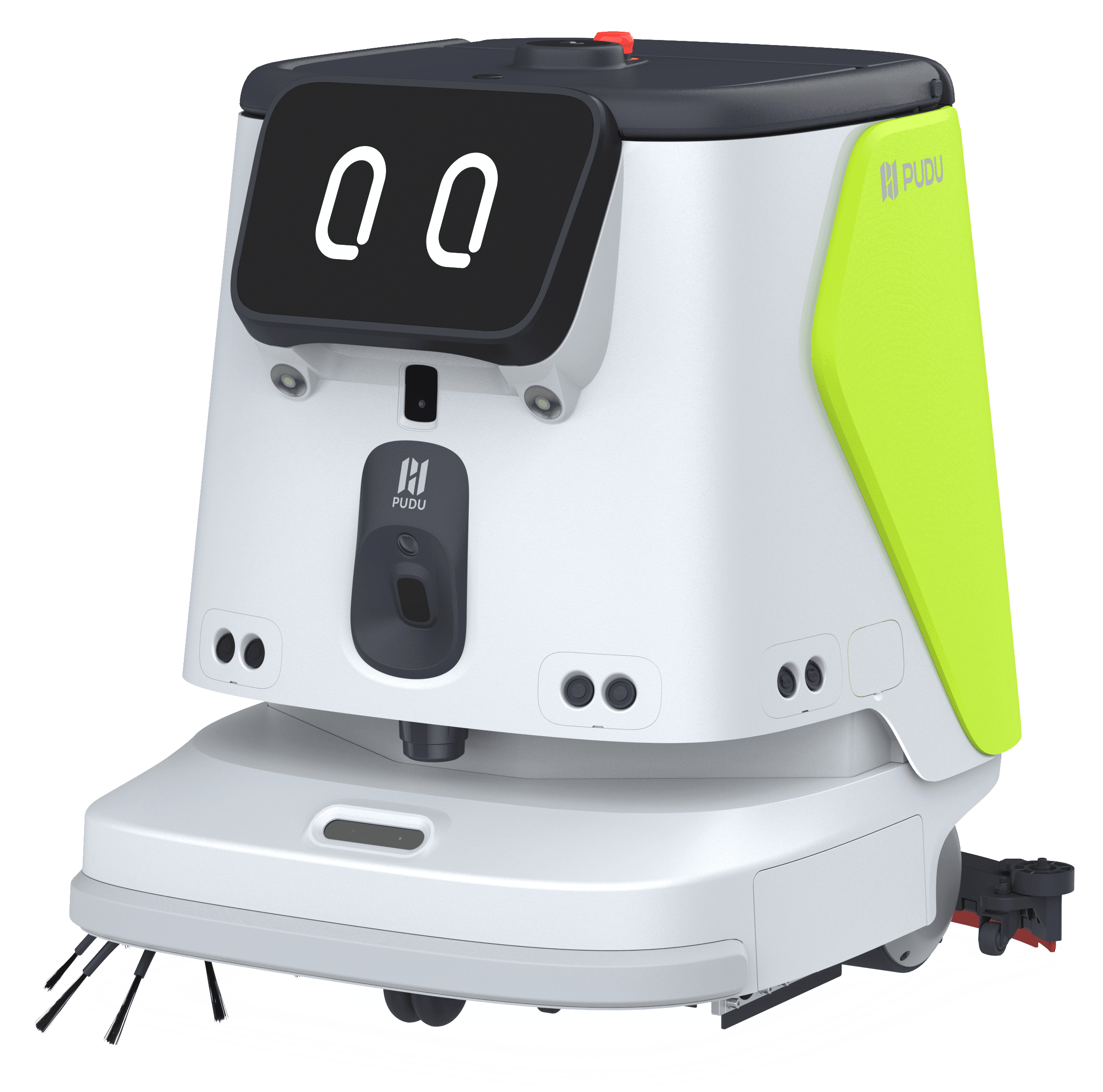
A metropolitan university asked us a question every facilities team is now asking: with cleaner turnover running near 28% a year and a night crew that is hard to keep staffed, can autonomous scrubbers hold the line on presentation across a whole campus — and pay for themselves? We ran their real floor plan through the Fleet & ROI Planner. The answer was a five-machine PUDU CC1 Pro fleet — one robot per building — with an 18-month payback.
The brief
The campus isn't one big floor — it's five separate buildings, each with its own ground-floor common areas: a library and learning hub, a science and labs block, the central lecture theatres, a student union with a food court, and a sports and recreation centre. Together that came to about 10,000 m² of cleanable hard floor that had to be washed six nights a week in term, before 8am lectures.
The constraints were ordinary and unforgiving:
- A six-hour evening window (6pm–midnight) — after the last classes, before the building alarms armed.
- Term-time surge. In peak weeks footfall doubles, food-court spills spike, and rain drags grit across every atrium. The floors that matter get dirtier, not just walked-on.
- People still around. Early evening isn't an empty building — anything cleaning here has to be quiet and safe near students.
- No appetite for a machine that needs an operator walking beside it all night.
Each building gets its own robot and charging dock — no lift integration needed, since every unit works a single ground-floor level. The food court runs a touch lower on audited coverage (stickier, busier), so it's the zone we watch.
The shortlist
The floors need washing, so this is scrubber territory — a wet 4-in-1, not a dry sweeper. We sized three genuine contenders against the same 10,000 m² and the same six-hour window, on each machine's real (not brochure) throughput.
We size every machine the same way — spec-rated throughput derated ~40% to a practical figure, applied to all brands equally — so the comparison is fair.
| Model | Type | Throughput (spec-derated) | Runtime | Indicative price | Units for this campus |
|---|---|---|---|---|---|
| PUDU CC1 Pro | Wet 4-in-1 scrubber | ~510 m²/h | ~5 h | ~A$32,800 | 5 |
| PUDU CC1 | Wet 4-in-1 scrubber | ~510 m²/h | ~5 h | ~A$30,100 | 5 |
| Gausium Scrubber 50 Pro | Wet scrubber | ~540 m²/h | ~3 h | ~A$70,600 | 5 |
On the same practical throughput, one scrubber comfortably covers a single building's ~2,000 m² inside the six-hour window — so every option is a five-machine fleet, one per building. That makes this a price-and-fit call, not a throughput one. The cheaper CC1 sizes identically and, at ~A$30,100 a unit, is the value pick — it pays back a touch sooner. We front the CC1 Pro here because its fast spot-cleaning mode earns its ~A$2,700 premium in the food court, where heavy-soil zones get a quicker second pass — a cleaning-quality choice, not a fleet-size one. The premium Gausium is capable, but its 3-hour runtime forces a mid-window recharge and its price is more than double, so its payback lands far out.
Payback = upfront ÷ monthly labour saved (constant across options — same floors, same crew displaced). Every model sized on the same spec-derated throughput, so it's a five-machine fleet either way. The cheaper CC1 pays back soonest; we front the CC1 Pro for its spot-clean mode. Shorter is better.
The numbers that matter
The fleet math closes cleanly. Each CC1 Pro washes its building's ~2,000 m² at its spec-derated ~510 m²/h — and once you allow for turning, edging and docking across the six-hour window, that still lands comfortably within the 5-hour battery on a single charge, with headroom for the term-time surge. Five robots, five buildings, one dock each.
Five CC1 Pro units at an indicative ~A$32,800 each (ex-GST) plus multi-site mapping and commissioning came to about A$171,000 upfront. On the labour side, washing 10,000 m² by hand is roughly 25 crew-hours a night at 400 m²/h. The robots don't erase the whole shift — a supervisor stays for exceptions, restrooms, stairs and detailing — but they displace about 10.5 hours of nightly floor-mopping labour, or about A$365 a night at A$35/hour fully loaded. Across ~26 term-time nights (six a week) that's roughly A$9,500 a month.
Break-even at ~18.0 months on a $171,000 upfront outlay saving $9,500/month.
That lands break-even at 18 months — and, as always, the estimate understates the value of consistency. A robot doesn't skip the back corridor at 2am during exam-week crunch, so audited coverage held up when the campus was busiest, which is exactly when manual coverage used to slip.
Three lessons from the rollout
- Map every building, then re-map. Five buildings meant five mapping days — and a re-map each time a food-court layout or exam-hall setup changed. Budget it as recurring, not one-off.
- Dock placement is per-building. Parked by the entrance of each atrium rather than a back store-room, the docks recovered roughly 10% of effective runtime in dead travel time.
- The night role changes, it doesn't vanish. The remaining staffer stopped pushing a mop and started supervising five robots and handling the spills and spaces they can't — a better job, and the reason the saving is ~A$9,500, not the full manual shift.
Would it work for your campus?
The honest answer is "it depends on your building count, your window, and your wage rates" — which is exactly what the planner is for.
- Run your own site through the Fleet & ROI Planner to see the payback on your floor area and shifts.
- Or tell us about your campus and we'll send a vendor-neutral shortlist with indicative pricing.
Frequently asked questions
- How many cleaning robots does a university campus need?
- In this composite, five PUDU CC1 Pro scrubbers — one per building — washed about 10,000 m² of ground-floor common-area hard floor each night across five buildings, inside a six-hour evening window. That's roughly 2,000 m² per robot per night, which one scrubber comfortably clears in the window on its spec-derated throughput. A cheaper CC1 fleet sizes the same (five units) for a bit less.
- Why use a scrubber and not a sweeper on a campus?
- Campus atria, food courts, corridors and library floors need washing — spills, tracked-in grit and foot-traffic grime — not just dust pickup. That's a job for a wet 4-in-1 scrubber like the PUDU CC1 Pro (which sweeps, vacuums, mops and scrubs). A dry sweeper such as the PUDU MT1 has no water or recovery tank and only lifts dust and debris.
- Are cleaning robots quiet enough to run around students?
- The PUDU CC1 Pro operates at about 70 dB — around the level of normal conversation — so it can run in the early-evening window while some students are still in common areas, not only after lock-up.
- What's the payback on a campus cleaning-robot fleet?
- About 18 months here: roughly A$171,000 upfront for five PUDU CC1 Pro units (indicative ~A$32,800 each, ex-GST) plus multi-site mapping, against about A$9,500 a month in displaced night-crew floor-washing labour.
Put these numbers to work
See which robot fits your facility and what it would save you.
Run the Fleet & ROI Planner