12,000 m² Between Two Shows: A 3-Robot Convention Centre Turnaround With a 24-Month Payback
A composite case study: sizing an autonomous scrubber fleet to wash three expo halls inside a five-hour post-bump-out wash window, so a venue can book back-to-back events without a buffer day.
By WhichBot Team
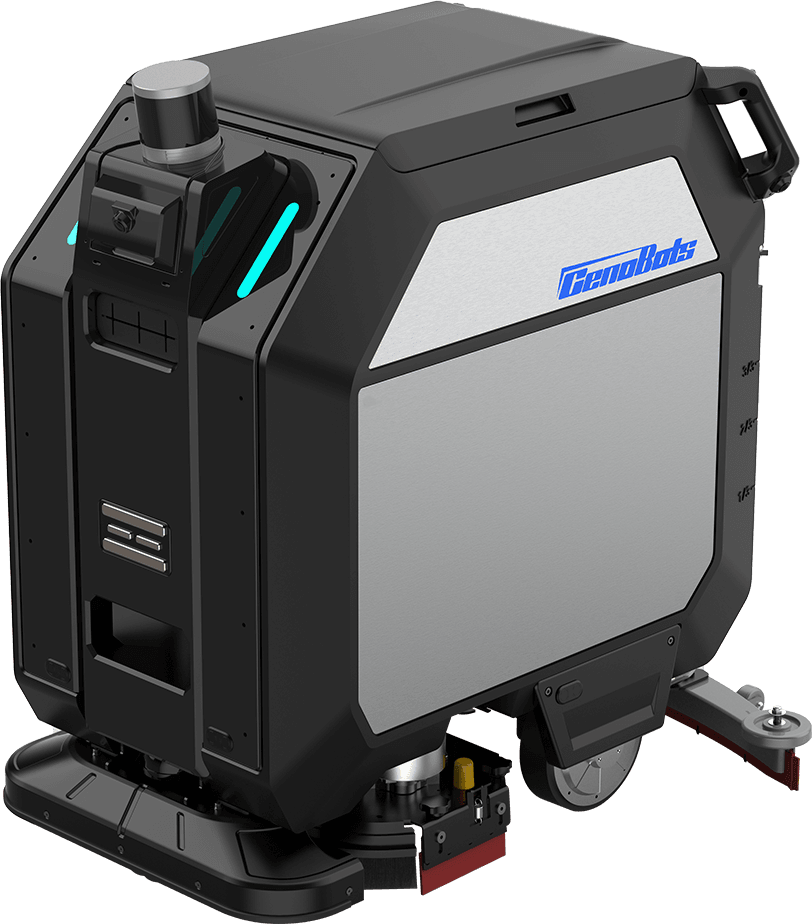
Demand for Australian business events has held up, but the casual workforce that used to turn halls around overnight never fully came back. That leaves venue managers with one expensive question: can you book back-to-back shows without a buffer day? We ran a three-hall convention centre through the Fleet & ROI Planner. The answer was a three-machine CenoBots L50 fleet that washes 12,000 m² inside the five-hour wash window once the halls are bare, with a 24-month payback.

The brief
The venue runs three exhibition halls plus a foyer and concourse — about 12,000 m² of robot-reachable hard floor. Its calendar is dominated by one- and two-day conferences, trade shows and gala dinners, so the whole venue turns over a little more often than every second night — about 16 full turnarounds a month. The commercial model depends entirely on turnaround speed: a show closes at 6pm, exhibitors bump out until about 11pm, and the next bump-in starts at 8am. Everything in between is cleaning.
The constraints were ordinary and unforgiving:
- A five-hour wash window (11pm–4am), between the last forklift leaving and the detail crew arriving. It does not stretch.
- A crew you can't reliably fill. Turnarounds need eight to twelve casual cleaners, of whom about six spend the whole window on floors. Filling that roster consistently is now the hardest part of the job, and a half-filled roster is a lost booking.
- Bulk debris comes out with the stands, not with the cleaner — pallets, cable-tie offcuts, carpet-tile adhesive and packaging leave during bump-out.
- Floors that are genuinely dirty, not just dusty: forklift tyre marks, spilled coffee, adhesive residue and two days of dense foot traffic on bare slab.
That last point settles the machine class. This is washing work — a wet scrubber, not a dry sweeper.
Halls A/B/C are 4,000, 3,500 and 2,800 m²; the foyer and concourse add 1,700 m². One robot per hall, with the foyer split so every machine carries an even 4,000 m² (Hall B's unit takes 500 m², Hall C's takes 1,200 m²). Percentages are the share of each zone the robot reaches: the foyer scores lowest because planters, seating pods and registration desks are permanent obstacles it must drive around, so their edges keep a manual pass.
The shortlist
We sized four genuine contenders against the same 12,000 m² and the same five-hour window. Every machine is sized on the same basis — manufacturer spec throughput, derated to a practical figure, applied to all brands equally — so no vendor gets scored on numbers the others can't produce.
| Model | Type | Throughput (spec-derated) | Runtime | Indicative price | Units for this venue |
|---|---|---|---|---|---|
| CenoBots L50 | Wet scrubber-dryer | ~990 m²/h | ~6 h | ~A$57,200 | 3 |
| PUDU CC1 | Wet 4-in-1 scrubber | ~510 m²/h | ~5 h | ~A$30,100 | 6 |
| PUDU CC1 Pro | Wet 4-in-1 scrubber | ~510 m²/h | ~5 h | ~A$32,800 | 6 |
| Gausium Marvel | Wet sweep + scrub combo | ~1,630 m²/h | ~6 h | ~A$100,100 | 2 |
The derate is not a judgement about any brand — it's a rule about the kind of number each maker publishes. The L50 and the Marvel both publish theoretical- maximum coverage: a figure derived from deck width × top speed rather than a measured working rate, so both are cut to ×0.45. The CC1 and CC1 Pro publish a practical working range, so both are cut to ×0.6. Same rule, applied blind.
Two things fall out of the table. First, CC1 and CC1 Pro size identically — they share the same rated coverage, so the Pro's extra spend buys its fast spot-cleaning mode, not a smaller fleet. Second, the Gausium Marvel is the only machine that does the job with two units, and it sweeps as it scrubs — but at ~A$100,100 each the two-robot fleet still costs more than the three-robot one.
The L50 wins here on cost-per-effective-m², with two honest caveats. Its specs are unconfirmed: published sources for the L50 disagree on its dimensions and coverage, so we treat its figures as indicative — the recommendation rests on a number we'd want a demo to prove. And it has no auto-refill dock: CenoBots positions the 55/55 L tanks for long single runs, but a human fills and drains them between nights, whereas the CC1 Pro's dock does that itself.
The turnaround
- 18:00 — Show closesExhibitors begin bump-out
- 23:00 — Halls bare & sweptStands out; crew pre-clears offcuts, tape, packaging
- 23:00–04:00 — Robot wash3× L50, 12,000 m², one charge each
- 04:00 — Crew detailTape residue, edges, re-passes
- 08:00 — Bump-in opensFloors event-ready
The robots own the five-hour block that used to consume most of the casual roster. Detailing and residue work stay human — and now happen on a clean floor rather than competing for it.
The sequencing matters more than the machine. The L50 needs roughly 94 cm of clear aisle, so it runs after bump-out, never during — one late-departing stand and a hall gets skipped. Venues where halls stay part-loaded overnight should size on the compact PUDU CC1 Pro instead, which works down to about 70 cm and sweeps and vacuums as it scrubs.
The numbers that matter
The fleet math closes cleanly. Take the L50's spec-derated ~990 m²/h, apply the standard 15% window-duty allowance for docking, turning and area transitions, and one machine has about 4,200 m² of capacity inside the five-hour block. Each robot carries 4,000 m², which it finishes in about 4¾ hours — inside both the window and its 6-hour battery, so nothing recharges mid-run. Three robots, three halls, 12,000 m².
Three units at an indicative ~A$57,200 each (ex-GST) is A$171,600, plus a ~A$16,400 site package — multi-hall mapping, charge-bay siting and water/drain commissioning — for roughly A$188,000 upfront. On the labour side, hand-washing 12,000 m² at 400 m²/h is about 30 crew-hours per turnaround. The robots don't erase that: about 14 of those hours stay human — adhesive and tape residue, the edge band along walls and columns, and re-passes on forklift-marked runs — and roughly 2 hours go to supervising the fleet. Net displaced: 14 hours a night, or A$490 at A$35/hour fully loaded. Across ~16 turnaround nights a month, that's A$7,840.
Payback = upfront ÷ monthly labour saved, where upfront = robots + the same ~A$16,400 site package for every option, and the saving is constant (same floors, same crew displaced). Holding that package flat cuts both ways: it is generous to the six-unit PUDU fleets, which need more charge bays and, being auto-docking, more water and drain points than three — and mildly harsh on the two-unit Marvel, which needs fewer. Scaling it would tighten the Marvel toward the CC1 Pro without changing the L50's win. Every model sized on the same spec-derated basis. The L50 leads, but the six-unit PUDU CC1 fleet is within a month of it. Shorter is better.
Break-even at ~24.0 months on a $188,000 upfront outlay saving $7,840/month.
Note how close that race is. The L50 wins by roughly a month over a six-unit PUDU CC1 fleet — which is inside the noise of any real quote. If your event calendar is thinner than 16 turnarounds a month, or your halls are subdivided into smaller rooms, six smaller machines are the more flexible answer; the L50's advantage is entirely a function of big, clear, uninterrupted floor.
Three lessons from the rollout
- Book the robots into the run sheet, not the cleaning roster. The wash block has to appear on the bump-out schedule so the last exhibitor knows the hall must be clear by 11pm. Treated as a cleaning task, it slips; treated as a venue milestone, it holds.
- Re-map after every hall reconfiguration. Movable walls change the map. Venues that split Hall A into two rooms mid-season had to re-map — budget it as recurring.
- The saving is a roster saving, not a headcount saving. The value here isn't firing cleaners; it's that a thin roster no longer costs you a booking. That's why the number is A$7,840 a month and not the full manual shift.
Would it work for your venue?
The honest answer is "it depends on your hall sizes, your turnaround window, and how many events you actually run" — which is exactly what the planner is for.
- Run your own venue through the Fleet & ROI Planner to see the payback on your floor area and event calendar.
- Or tell us about your site and we'll send a vendor-neutral shortlist with indicative pricing.
Frequently asked questions
- How long does it take to clean an exhibition hall between events?
- In this composite, three CenoBots L50 scrubbers washed about 12,000 m² of hall and foyer floor inside a five-hour window (11pm–4am) once the stands were out — roughly 4,000 m² per machine, on one battery charge each. A hand-mopping crew needs about 30 labour-hours to wash the same floor.
- How many cleaning robots does a convention centre need?
- Three, for a 12,000 m² three-hall venue on a five-hour turnaround. The CenoBots L50's spec-derated throughput is about 990 m²/h, and applying the usual 15% window-duty allowance for docking, turning and transitions leaves roughly 4,200 m² of capacity per machine per five-hour window — so 12,000 m² needs three, at about 4,000 m² each. A compact scrubber such as the PUDU CC1 Pro (~510 m²/h derated, ~2,200 m² per window) would need six.
- Can a cleaning robot pick up bump-out debris?
- Not bulk debris. The CenoBots L50 is a scrubber-dryer — it mops and scrubs, it does not sweep. Pallets, offcuts, tape and packaging come out with the stands during bump-out, and the crew does a quick debris pre-clear of the bare slab before the robots start; the L50s then wash a swept floor. Machines that sweep as they scrub — the 4-in-1 PUDU CC1 and CC1 Pro, or the Gausium Marvel — handle light residual grit in the same pass.
- What's the payback on a convention centre cleaning-robot fleet?
- About 24 months here: roughly A$188,000 upfront for three CenoBots L50 units (indicative ~A$57,200 each, ex-GST) plus multi-hall mapping and commissioning, against about A$7,840 a month in displaced floor-washing labour across ~16 turnaround nights on a two-day booking cycle.
- Do exhibition halls need the floor cleared before a robot can run?
- Yes, and more than most sites. The L50 needs about 94 cm of clear aisle to work — so it runs after bump-out, not during it. A compact scrubber like the PUDU CC1 Pro gets down to about 70 cm if your halls stay part-loaded overnight.
Put these numbers to work
See which robot fits your facility and what it would save you.
Run the Fleet & ROI Planner