The Robot Can't Go in the Freezer: Sweeping a Cold-Chain DC to a 20-Month Payback
A composite case study: sizing a dry-sweeper fleet for a −25 °C cold-chain distribution centre — why the freezer cells stay manual, why the ambient dock is where the payback lives, and the temperature spec that decided the shortlist.
By WhichBot Team
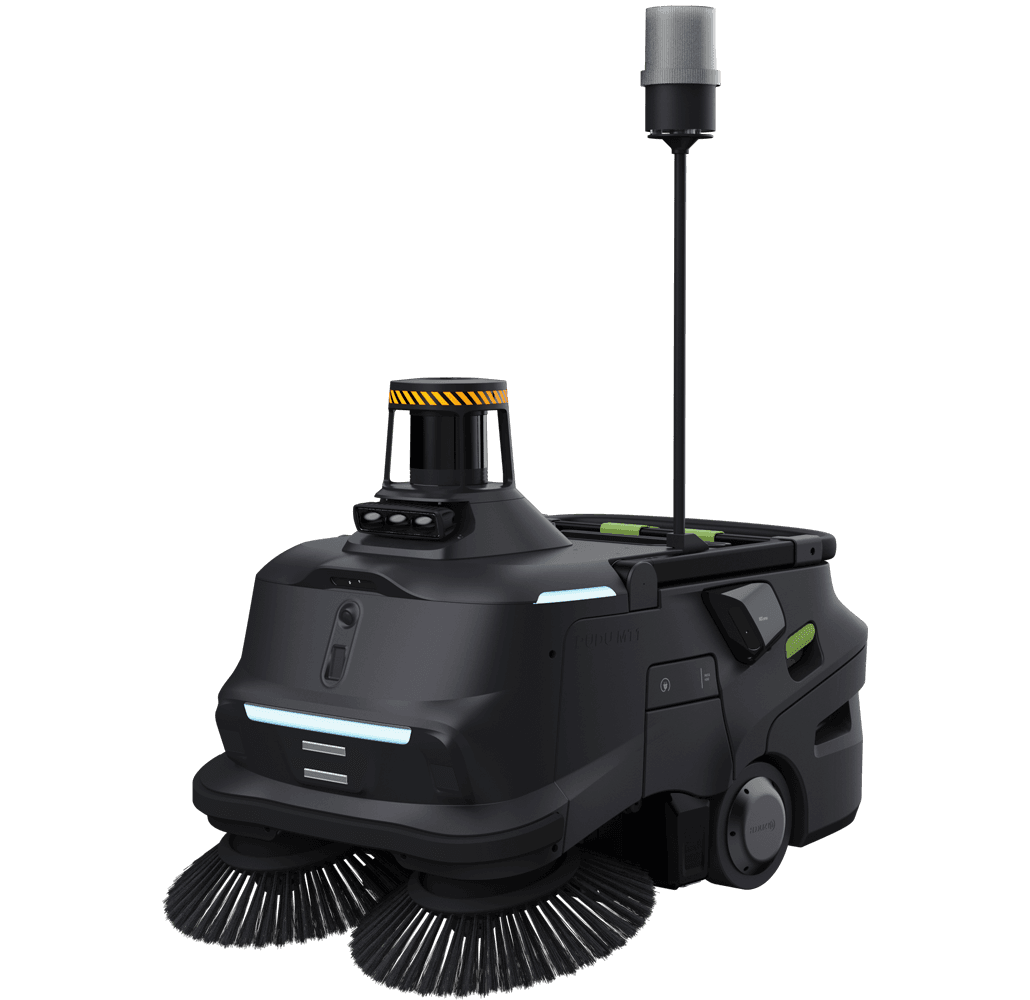
The first thing the sizing exercise found is the headline: the robot can't go in the freezer. A cold-chain operator asked us to fleet-plan their distribution centre — freezer cells at −25 °C, chillers at 2 °C, and an ambient dock that never stops — and the honest answer started with a temperature spec, not a coverage number. The payback came anyway: two PUDU MT1 Max dry sweepers covering 6,000 m² of ambient floor a night, breaking even in about 20 months — while the scarce, rotation-limited cold-rated crew got their hours back for the work only humans can do.
The brief
The site is a 14,000 m² temperature-zoned distribution centre: 5,000 m² of freezer cells held at −23 to −25 °C, 2,500 m² of chiller rooms at 0–4 °C, and 6,500 m² of ambient floor — dock apron, inbound staging, pack-and-label, and the despatch corridors. Australian cold storage is running close to full, and this site is typical of why the question is urgent: throughput keeps rising, but cold-rated labour is the hardest roster line in the building to fill. Freezer stints are capped by cold-exposure practice — short rotations with mandatory warm-up breaks — so every ambient-side cleaning hour is being paid for out of the scarcest labour pool on site.
The constraints were ordinary and unforgiving:
- Three thermal zones, one cleaning budget. Whatever the robots couldn't reach would still need the crew.
- Dry debris on the ambient side — cardboard fines, shrink-wrap offcuts, pallet splinters, soil through the dock doors. And a hard site rule: no water near freezer thresholds, where tracked moisture freezes into an ice hazard on the cold slab.
- A four-hour clear window, 23:00 to 03:00, between last despatch and first inbound — seven nights a week.
- Dock plates, expansion joints and forklift traffic on the apron.
The zone map is the whole decision
Machine capability here is a data question, not a marketing one. PUDU's MT1 Max operation guide rates the machine for −10 °C to 45 °C working temperatures, with charging above 0 °C — which draws the map by itself:
| Zone | Temperature | Floor | Who cleans it |
|---|---|---|---|
| Freezer cells | −23 to −25 °C | 5,000 m² | Manual. Below the rated floor of every machine that publishes one. |
| Chiller rooms | 0 to 4 °C | 2,500 m² | Manual in phase 1 — inside the MT1 Max's working rating, held back until cold-to-warm condensation cycling is trialled. |
| Ambient dock, staging, pack | ~12 to 24 °C | 6,500 m² | Robots. 6,000 m² reachable after racking and pallet exclusions. |
Coverage is what the fleet audits at on the ambient side. The freezer is excluded by the temperature spec, the chiller by choice until phase 2 — both stay on the manual roster, which is exactly what the ROI math assumes.
The shortlist
Every rate below is the manufacturer's rated coverage put through the same derate — 0.6 for a practical published figure, 0.45 where the vendor publishes a theoretical maximum — so nobody is compared on a friendlier basis than anyone else. In this environment one column decides it: the published cold rating.
| Model | Rate (spec → derated) | Runtime | Rated cold floor | Unit price | Fleet & capex |
|---|---|---|---|---|---|
| PUDU MT1 Max | 2,200 → 1,320 m²/h | ~7 h | −10 °C (operation guide) | ~A$39,218 | 2 units · A$78,436 |
| PUDU MT1 | 1,800 → 1,080 m²/h | ~6 h | 0 °C — ruled out | ~A$25,992 | — |
| Gausium Beetle Pro | 3,240* → 1,458 m²/h | ~5 h | none held | ~A$42,680 | 2 units · A$85,360 |
| CenoBots SP50 | 1,987 → 1,192 m²/h | ~8 h | none held | ~A$44,688 | 2 units · A$89,376 |
*published as a theoretical maximum, so it takes the tighter 0.45 derate. “None held” means our catalogue holds no operating temperature for that machine — a gap in our research, not a statement about the vendor. We hold one for the two PUDU machines because their operation guides publish it; ask Gausium and CenoBots for theirs before you shortlist on this axis.
The prices are not built the same way, and it matters more here than usual. The MT1 and SP50 are US list figures converted at an indicative rate and cut 10%; the MT1 Max has no US listing, so it comes off an Australian distributor card plus 5%; the Beetle Pro comes from a retailer whose base configurations run about 20% under that footing, so we level it up 20% before converting — an adjustment that only ever moves a Gausium price upward. Undo it and the Beetle Pro pair is about A$74,300 installed and pays back in month 18, ahead of the MT1 Max's month 20. So price is not what separated them here; the temperature rating is.
The cheapest machine lost on the environment, not the price. The MT1 would have been ~A$26,400 less over two units — but PUDU rates it for 0–40 °C. The ambient zone's typical 12–24 °C sits comfortably inside that band; the dock doors on a winter morning and the sub-zero air spilling across every freezer threshold do not — and those are exactly the floors the sweeper is there to cover. The Beetle Pro and SP50 publish no operating temperature at all, which on a temperature-zoned site is a procurement risk, not a blank cell. The MT1 Max was the only machine on the list with a manufacturer-stated sub-zero working floor — plus IP54 sealing against corrugate dust and a rated tolerance for the dock's speed bumps.
The money
Sizing follows the window. At 1,320 m²/h derated, less 15% in-window duty for docking, bin empties and zone transitions, each unit sweeps about 1,122 m²/h — roughly 4,500 m² across the four-hour window. The 6,000 m² ambient floor needs 5.4 robot-hours, so two units run about 2.7 hours each and finish with runtime to spare.
Two units at ~A$39,218, plus mapping, commissioning and two charge-pile installs at about A$3,200, came to roughly A$81,600.
The displaced baseline is deliberately conservative. One night hand spent about five hours a shift sweeping the apron and pack floor — roughly 2,500 m² a night at the 500 m²/h hand-sweep rate we hold every manual comparison to, with the staging corners on a weekly rotation. We credit those five hours, less one hour of daily robot supervision (half an hour per machine), across a 7-night week: 4 hours × 30 nights × A$35/hr fully loaded is A$4,200 a month — while audited coverage goes from 2,500 m² a night to 6,000.
Break-even lands in month 20 on A$81,636 upfront saving A$4,200/month. The freed-up freezer-side rotation hours are upside we left out of the math.
Payback = upfront ÷ monthly saving, rounded up to the month it lands in, on the same A$4,200/month saving. On our price footing the MT1 Max fleet is cheapest, but level out the +20% we add to the Gausium price and the Beetle Pro pair lands in month 18, ahead of it — the cold rating, not the price, is what decides this site. Shorter is better.
What carried over
- The spec sheet is a site map. Working range, charging floor and IP rating drew the deployment before anyone drew a route. If a vendor doesn't publish an operating temperature, treat that as an answer.
- Keep water away from the thresholds. The dry sweeper wasn't just the right machine for the debris — it removed a standing ice-hazard argument between cleaning and safety.
- The win is where the labour is scarcest. The robot never enters the freezer, but it hands the cold-rated crew their ambient hours back — which is the hardest labour on site to buy.
Would it work for your site?
It depends on your zone map, your window and your wage rates — which is exactly what the planner is for.
- Run your site through the Fleet & ROI Planner to size it on your own numbers.
- Or tell us about your site and we'll send a vendor-neutral shortlist with indicative pricing.
Frequently asked questions
- Can a floor-cleaning robot work inside a −25 °C freezer?
- Not in this class of machine. The PUDU MT1 Max — the largest-battery dry sweeper we compared, at 60 Ah and about seven hours — is rated by PUDU for −10 °C to 45 °C working temperatures, and charging must happen above 0 °C. Freezer cells at −23 to −25 °C stay manual; the robot earns its keep on the ambient dock, staging and pack floors.
- What kind of cleaning robot suits a cold-chain warehouse?
- A dry sweeper, on the ambient side. Dock and staging floors collect cardboard fines, shrink-wrap offcuts, pallet splinters and tracked-in soil — dry debris. Just as important, a sweeper introduces no water near freezer thresholds, where tracked moisture freezes into an ice hazard. We size this class with the PUDU MT1 Max at a spec-derated 1,320 m²/h.
- Why not run a wet scrubber near a freezer door?
- Because water tracked or misted near a sub-zero threshold freezes on contact with the cold slab, creating slip and forklift hazards exactly where traffic is heaviest. Dry sweeping cleans the same floor without introducing water, which is why cold stores default to sweepers on the freezer-adjacent side.
- What's the payback on cleaning robots in a cold store?
- About 20 months in this composite: roughly A$81,600 upfront for two PUDU MT1 Max units plus mapping and charge-pile installs, against about A$4,200 a month of displaced night-sweep labour across a 7-night week.
- How do cleaning robots help with cold-store labour shortages?
- Freezer work is rotation-limited — cold-exposure practice caps continuous sub-zero stints and mandates warm-up breaks, so cold-rated labour is the scarcest resource on site. Moving the ambient sweeping to robots hands those rostered hours back to the freezer-side tasks only humans can do.
Put these numbers to work
See which robot fits your facility and what it would save you.
Run the Fleet & ROI Planner