The Labour You Can't Fly In: Two Dry Sweepers for a Remote Mining Village, Paid Back in 10 Months
A composite case study: sizing a PUDU MT1 dry-sweeper fleet for a remote WA mining village where every labour hour carries flights and a bed — and why remote labour economics cut the payback from a metro 14 months to about 10.
By WhichBot Team
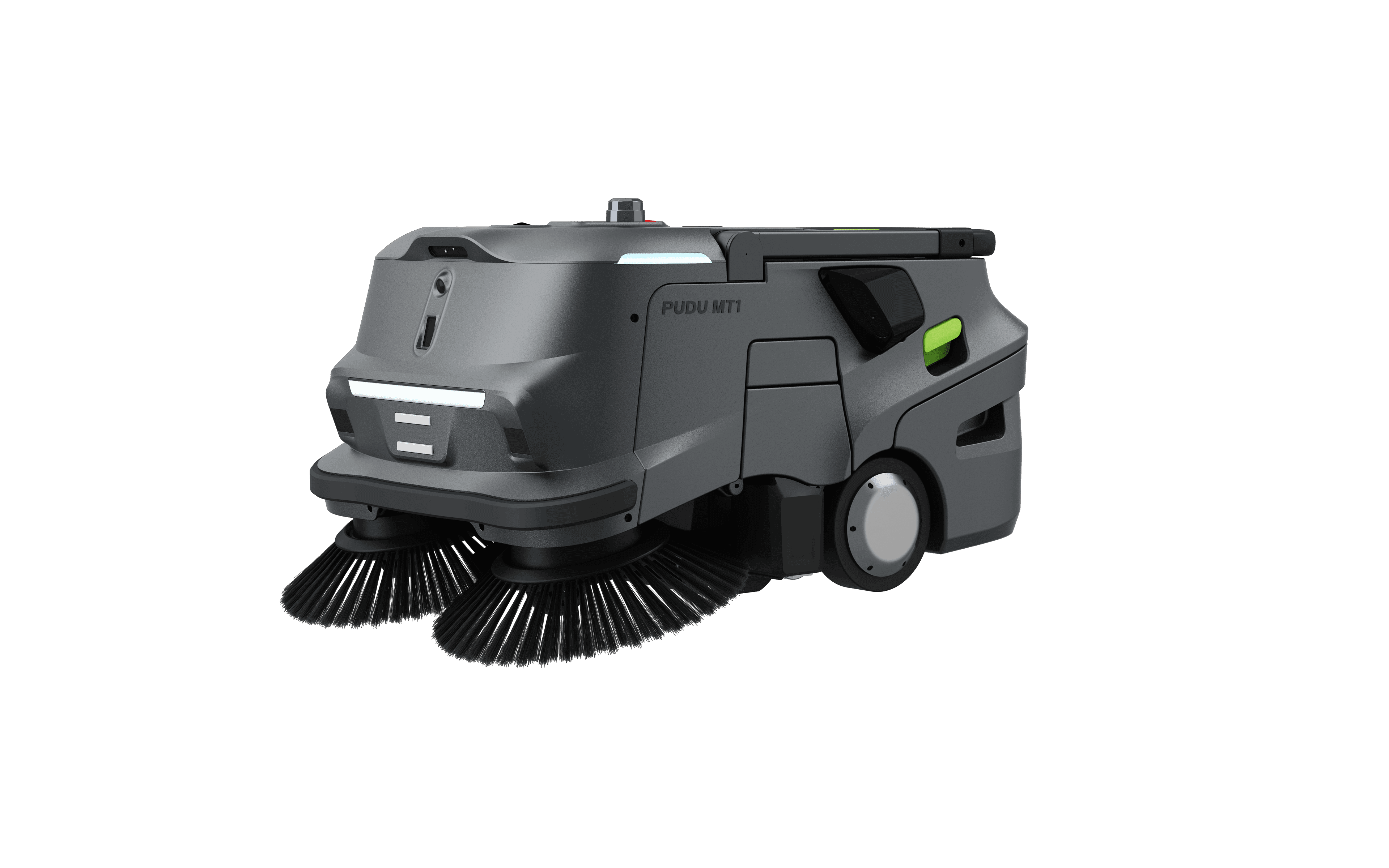
On a remote Western Australian mine site, a cleaner is never just a wage. The role comes with flights, a village bed, meals and a roster — and it competes for that bed against every production-support role the site is also short of. A remote utility role has to carry flights, a bed and meals on top of the wage, which is why we planned this scenario at A$48 an hour fully loaded — about a third above the planner's A$35 metro default. So when a village operator asked whether autonomous sweepers could hold their communal floors, the maths came back unusually fast: two PUDU MT1 dry sweepers covering 7,560 m² a night, paying back in about 10 months — four months quicker than the identical fleet would manage in a metro facility.
The brief
The composite site is a mining village and its adjoining admin precinct — single-storey communal buildings on sealed hard floors, air-conditioned, and dusted daily by whatever the boots drag in:
| Zone | Hard floor | The problem |
|---|---|---|
| Dry mess & servery corridors | 2,700 m² | Three meal services a day, grit underfoot by each one |
| Gym & recreation building | 2,100 m² | High traffic before and after every shift |
| Admin & training block | 1,600 m² | Presentation floor for inductions and visitors |
| Enclosed link walkways | 2,000 m² | The red-dust highway between buildings |
That's 8,400 m² of precinct, of which we planned 90% as robot-reachable — 7,560 m² — with furniture edges and tight servery corners staying a manual job. The debris is dry: red dust, grit and food-court crumbs on hard floor, which is sweeper work, not scrubber work. The utility crew had been giving the floors about five rostered hours a day, which at the 500 m²/h hand-sweep rate we hold every manual comparison to covers roughly 2,500 m² — under a third of the precinct — so most zones saw a broom only on rotation.
The cleaning window is the quiet 6 hours between the last meal service wind-down and breakfast prep, and the constraint that matters most is the one you can't see on a floorplan: there were no applicants. The vacancy had been open for a full quarter.
The shortlist
Four dry machines were credible. Every rate below is the manufacturer's rated coverage put through the same derate — 0.6 for a practical published figure, 0.45 where the vendor publishes a theoretical maximum — so nobody is compared on a friendlier basis than anyone else.
| Model | Type | Rate (spec → derated) | Runtime | Unit price | Fleet & capex |
|---|---|---|---|---|---|
| PUDU MT1 | Dry sweeper | 1,800 → 1,080 m²/h | ~6 h | ~A$25,992 | 2 units · A$51,984 |
| PUDU MT1 Max | Dry sweeper | 2,200 → 1,320 m²/h | ~7 h | ~A$39,218 | 2 units · A$78,436 |
| Gausium Beetle Pro | Dry sweeper | 3,240* → 1,458 m²/h | ~5 h | ~A$42,680 | 2 units · A$85,360 |
| CenoBots SP50 | Dry sweep + vacuum | 1,987 → 1,192 m²/h | ~8 h | ~A$44,688 | 2 units · A$89,376 |
*published as a theoretical maximum, so it takes the tighter 0.45 derate. The SP50's specs are unconfirmed and availability is limited, so treat its row as indicative.
The prices aren't built the same way either. The MT1 and the SP50 are US list figures converted at an indicative rate and cut 10%. The MT1 Max has no US listing, so it comes off an Australian distributor card plus 5%. The Beetle Pro comes from a retailer whose base configurations run about 20% under that footing, so we level it up 20% before converting — an adjustment that only ever moves a Gausium price upward. Both of those raise a rival of the machine we recommend: level everything to the plain converted-list basis and the Beetle Pro pair lands near A$71,100, ahead of the MT1 Max, and it pays back in about 14 months rather than 16.
Sizing is the same arithmetic for all of them. The engine takes a further 15% off the derated rate for docking, bin checks and zone transitions, so the MT1 works at about 918 m²/h in-window — roughly 5,500 m² across the 6-hour night. Against 7,560 m², one unit only keeps up with about 73% of the precinct, so every candidate lands on a two-unit fleet, each sweeping ~3,780 m² in about 4.1 hours — comfortably inside one charge. And once every fleet is two units with capacity to spare, the comparison collapses to price. The MT1 pair is roughly A$19,000–A$26,000 cheaper than its nearest rival, depending on which price basis you level to. In a dusty shed we'd pay the MT1 Max's IP54 premium; on air-conditioned interior floors where the dust arrives on boots rather than on the wind, it buys nothing.
The money
Two units at ~A$25,992 came to A$51,984, plus an A$8,000 allowance we set for freight to site and a fly-in commissioning visit — a line a metro install wouldn't carry — for A$59,984 all-up.
The saving is credited conservatively: only the crew's five rostered floor hours, less half an hour per machine per day for bin emptying, filter shakes and exception checks — our figure; the engine's own rule of eight minutes per robot cleaning hour would charge 1.1 hours across the pair rather than 1.0, which moves the payback below by about a fortnight. That's a net 4.0 hours a day returned, at the A$48/h fully-loaded remote rate we ran the planner with (about a third above its A$35 metro default, reflecting on-costs plus the flights-bed-meals overhead every rostered hour carries). Net saving: A$192 a day, or about A$5,840 a month — while nightly audited coverage triples from ~2,500 m² to 7,560 m². That figure is net of supervision but before consumables: power, brushes and service run about A$100 a machine a month on the planner's default, which would take the payback to roughly eleven months rather than ten.
Payback = fleet capex (plus the same A$8,000 remote install allowance) ÷ the same A$5,840 monthly saving. Every fleet is two units and covers the precinct, so the cheapest capable pair wins. Shorter is better.
Break-even at ~10 months on A$59,984 upfront saving A$5,840/month. Run at the planner's A$35 metro rate instead, the same fleet takes about 14 months — remote labour economics do the compressing.
What the remote setting changes
- The labour rate does the heavy lifting. Nothing about the robots is different out here — the same two machines in a metro facility pay back in about 14 months. At A$48/h loaded, every displaced hour is worth 37% more, and the freed hours go back into a labour pool you literally cannot hire into.
- The machine follows the environment. The village runs the MT1; the heavy-vehicle workshop is a different environment — airborne dust, 50 mm speed humps — and the site listed the IP54-rated MT1 Max as its stage-two unit for that floor rather than stretching the village fleet across it.
- Spares live on site. When the nearest parts counter is a flight away, brushes and filters are stocked in the store, not ordered on failure. We costed that habit into the A$8,000 install line rather than pretending freight is free.
- 75 dB picks its own schedule. The MT1 is a fine overnight neighbour in a mess hall and a poor one near sleeping night-shift workers — the fleet stays in the communal buildings, and the accommodation wings stay a daytime manual job.
- No capex appetite? The card has a rental tier. At A$56/day on the shortest 12-month term, two rented units run about A$40,880 a year against roughly A$70,080 a year of labour saved — still positive from month one, with no upfront approval to win.
Would it work for your site?
It depends on your reachable floor, your window and — more than anywhere else — your true loaded labour rate, which is exactly what the planner is for.
- Run your site through the Fleet & ROI Planner to size it on your own numbers.
- Or tell us about your site and we'll send a vendor-neutral shortlist with indicative pricing.
Frequently asked questions
- What kind of cleaning robot suits a mining site?
- For the village and admin buildings — where the problem is red dust tracked onto hard interior floors — a dry sweeper like the PUDU MT1, planned at a spec-derated 1,080 m²/h. Wet scrubbers only belong where floors are actually washed, and the heavy-vehicle workshop's airborne dust and speed humps call for the IP54-rated MT1 Max instead.
- Why do cleaning robots pay back faster on remote mining sites?
- Because every labour hour on site carries flights, a village bed and meals on top of the wage. In this composite we planned remote utility labour at A$48/h fully loaded versus the A$35 metro default — the identical two-sweeper fleet pays back in about 10 months remote versus about 14 metro.
- How many cleaning robots does a mining village need?
- In this composite, two PUDU MT1 dry sweepers cover 7,560 m² of robot-reachable communal floor inside a 6-hour overnight window — about 3,780 m² per unit against a per-unit window capacity of roughly 5,500 m². One unit alone would only keep up with about 73% of the precinct.
- What does a PUDU MT1 cost in Australia?
- About A$25,992 ex-GST on our indicative converted-list estimate. Two units plus an A$8,000 allowance for remote freight and commissioning came to roughly A$60,000 in this scenario — or the machine rents at A$56/day on the shortest 12-month tier of the Australian price card.
- Is the PUDU MT1 dust-proof?
- PUDU publishes IPX3 for the MT1 — a water-spray rating whose dust digit simply isn't published. For interior village floors that's fine; for the workshop's airborne dust and 50 mm speed humps, the MT1 Max carries a full IP54 rating and is the unit to spec.
Put these numbers to work
See which robot fits your facility and what it would save you.
Run the Fleet & ROI Planner