Sweeping a 10,000 m² Transit Concourse That Never Closes — A 3-Robot Fleet with an 18-Month Payback
A composite case study: sizing a three-unit PUDU MT1 Max dry-sweeper fleet to keep a 24/7 station concourse clear of dust, grit and litter — with the real payback math from our Fleet & ROI engine.
By WhichBot Team
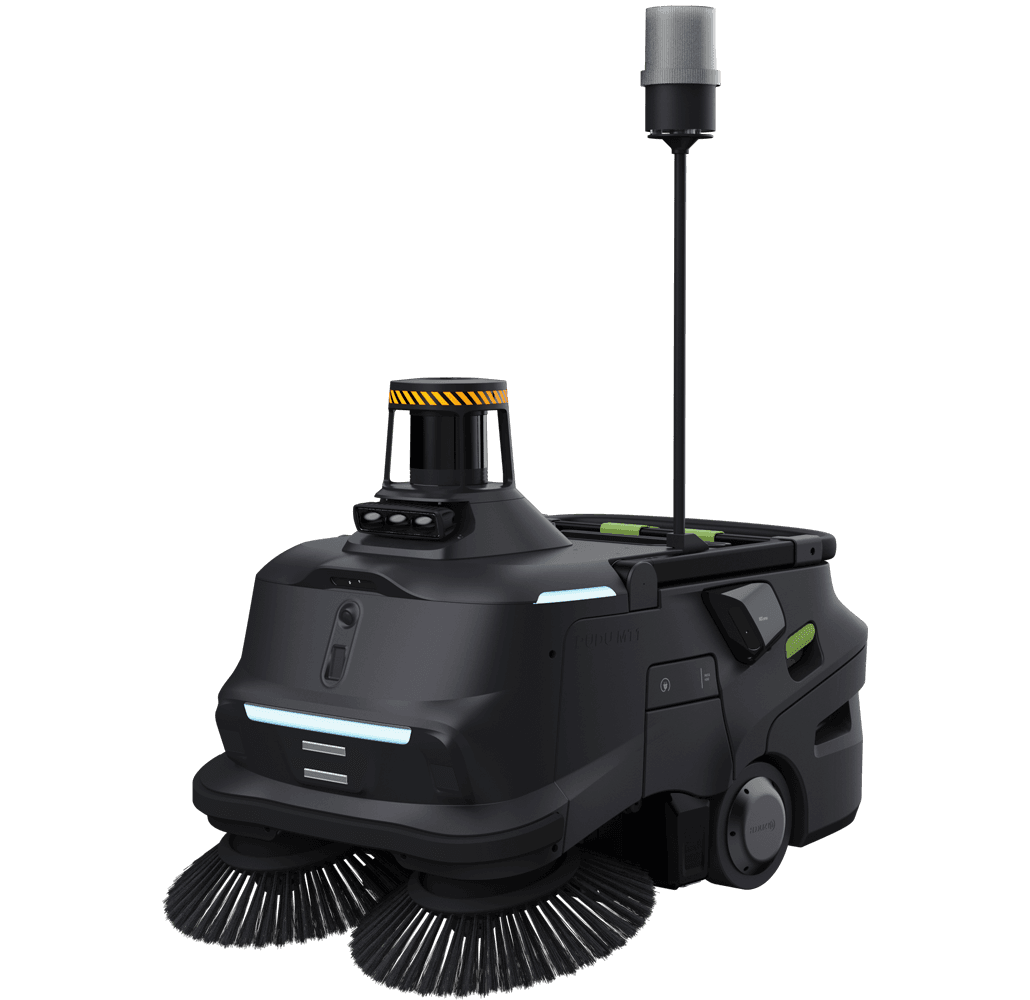
A metropolitan transit interchange put a hard question to us: their concourse never closes, it's always gritty, and the overnight sweep crew was the hardest shift to keep staffed. Could autonomous sweepers hold a 24/7 public floor to standard — and pay for themselves? We ran their real floor plan through the Fleet & ROI Planner. The answer was a three-unit PUDU MT1 Max fleet, sweeping about 10,000 m² a day, with an 18-month payback.

The brief
A station concourse is the opposite of a warehouse floor: it never gets a quiet lock-up, and the dirt is relentless. About 10,000 m² of hard floor — the main concourse, ticket hall, platform approaches, a retail spine and the bus interchange — had to stay clear of tracked-in grit, dust and litter around the clock, with passengers on it every hour of the day.
The constraints were ordinary and unforgiving:
- No overnight window in the usual sense — the busiest zones never fully close; the deep sweep has to fit a short low-traffic lull, with lighter passes through the day around foot traffic.
- Dust and grit, not spills. This is dry-sweep work — a wet scrubber on the open concourse would be the wrong tool. Sealing against dust ingress matters.
- People everywhere. Anything cleaning here has to detect and yield to passengers, and dock itself out of the way to recharge.
- Thresholds and tactile strips. Transit floors are full of edges a small sweeper trips on.
Percentages are representative cleaning quality, not audit data and not area reached: the whole sweepable concourse is in scope, and the escalator landings score lowest because foot traffic re-soils them fastest. The escalators and stairs themselves are a separate manual job, not part of the 10,000 m². Docks sit in low-traffic bays so a robot can top up mid-day without crossing the passenger flow.
The shortlist
The concourse needs sweeping, so this is dry-sweeper territory — no water, no recovery tank. We sized three genuine sweepers against the same 10,000 m² of sweepable concourse (stairs and escalators excluded, as a separate manual job), the same four-hour overnight deep-sweep window, and on the same basis: each machine's rated coverage derated to a practical figure, applied identically, then the engine's window-duty factor. The MT1 and MT1 Max quote practical cover-mode figures, so they get the ×0.6 derate; the Beetle Pro's 3,240 m²/h is a theoretical maximum, so it gets the tighter ×0.45. No brand sizes off a number the others don't publish.
| Model | Type | Throughput (spec-derated) | Runtime | Sealing | Indicative price | Units |
|---|---|---|---|---|---|---|
| PUDU MT1 Max | Dry sweeper | ~1,320 m²/h | ~7 h | IP54 | ~A$39,200 | 3 |
| PUDU MT1 | Dry sweeper | ~1,080 m²/h | ~6 h | IPX3 | ~A$26,000 | 3 |
| Gausium Beetle Pro | Vacuum-sweeper | ~1,460 m²/h | ~5 h | Not published | ~A$42,700 | 3 |
Sized on full reach of the sweepable concourse over the four-hour deep-sweep window, every option rounds up to a three-machine fleet — so this isn't a "which is fastest" call, it's a "which survives the environment" call. The PUDU MT1 is the value pick: at ~A$26,000 a unit it sizes the same three machines and pays back soonest. We front the MT1 Max because a 24/7 concourse is exactly where its extras earn out: IP54 dust sealing (the MT1 is IPX3), and the seven-hour battery for fewer dock trips across a non-stop day. The Beetle Pro is a capable industrial sweeper, and on capex alone it is the marginal one — at full reach it sizes to 2.02 robots, so it only just tips past two and its third machine is the least earned of the three fleets, yet it is still the most expensive — but it publishes no dust-sealing figure for a dusty public floor, which is the binding constraint here.
Payback = upfront ÷ monthly labour saved (constant across options — same floor, same crew displaced), so the ranking is really just capex. The cheaper MT1 pays back soonest; we accept the MT1 Max's longer payback for IP54 sealing and a bigger battery in a dusty, never-closing environment. Shorter is better.
The numbers that matter
The fleet math closes cleanly. Sweeping 10,000 m² by hand at 500 m²/h is about 20 crew-hours of open-floor work a day. Each MT1 Max sweeps its ~3,300 m² share at its spec-derated ~1,320 m²/h — under three hours of cleaning, comfortably inside both the four-hour overnight lull and its seven-hour battery, no mid-pass recharge. Three robots, three docks, rolling passes around the clock.
Three MT1 Max units at an indicative ~A$39,200 each (ex-GST) plus multi-zone mapping and commissioning came to about A$122,000 upfront. The robots don't erase the shift — a supervisor and a cleaner still handle bins, escalator landings, stairs, gate lines and the spills a dry sweeper can't — but they displace roughly 6.5 crew-hours a day of open-floor sweeping, about A$228 a day at A$35/hour fully loaded. Across a 30-day month that's about A$6,800.
Break-even at ~18 months on a ~A$122,000 outlay for three PUDU MT1 Max units, saving ~A$6,800/month in displaced sweeping labour. The model counts labour — not the fewer slip incidents or the cleaner morning-peak presentation that a floor swept on schedule at 3am actually delivers.
The pre-deployment estimate was directionally right on labour, but — as always — it understated the value of consistency. A robot sweeps the retail spine at 3am whether or not the last human shift got to it, so coverage held up through the morning peak, which is exactly when a stretched manual crew used to fall behind.
Three lessons from the rollout
- Map for the traffic, not just the floor. The concourse was mapped in zones with time-of-day rules, so the deep sweep runs in the overnight lull and daytime passes stay out of the peak flow.
- Docks belong in the dead space. Parked in low-traffic bays near each zone, the docks let a robot top up without ever crossing the passenger stream, which kept dead travel to the dock off the passenger floor.
- The role becomes supervision. The overnight sweeper operator became a fleet supervisor handling exceptions, bins and the stairs and escalators the robots can't reach — a better job, and the reason the saving is ~A$6,800, not the whole shift.
Would it work for your concourse?
The honest answer is "it depends on your floor area, your traffic pattern and your wage rates" — which is exactly what the planner is for.
- Run your own site through the Fleet & ROI Planner to see the payback on your floor area and shifts.
- Or tell us about your facility and we'll send a vendor-neutral shortlist with indicative pricing.
Frequently asked questions
- What kind of cleaning robot suits a train or bus station concourse?
- A dry sweeper, not a wet scrubber — the main concourse floor picks up dust, grit and litter from constant foot traffic, which is a job for a dry sweeper like the PUDU MT1 Max. Its IP54 sealing is built for that dusty, gritty environment. Wet spills and food-court zones can be handled separately by a scrubber.
- How many cleaning robots does a transit concourse need?
- In this composite, three PUDU MT1 Max units swept about 10,000 m² of hard floor each day — roughly 3,300 m² per robot on its spec-derated ~1,320 m²/h, run in rolling passes around 24/7 passenger traffic rather than one overnight blitz.
- Can cleaning robots run around passengers 24/7?
- They are built for it. The MT1 Max carries 3D obstacle avoidance and runs rolling passes, routing around foot traffic, with the heaviest sweep in the low-traffic overnight lull and lighter passes through the day. They dock in low-traffic bays to recharge. Stairs, escalator landings and gate lines stay a manual job. In this composite a supervisor was on shift — treat crowd behaviour as a commissioning question for your own concourse, not a spec-sheet guarantee.
- What's the payback on cleaning robots for a station?
- About 18 months in this scenario: roughly A$122,000 upfront for three PUDU MT1 Max units plus mapping, against about A$6,800 a month in displaced concourse-sweeping labour.
- PUDU MT1 or MT1 Max for a station concourse?
- The MT1 is cheaper and pays back sooner (~12 versus ~18 months), but it's rated IPX3. For a genuinely dusty concourse that never closes, the MT1 Max's IP54 dust sealing, seven-hour battery and 50 mm bump clearance are worth the longer payback — which is the call we made here.
Put these numbers to work
See which robot fits your facility and what it would save you.
Run the Fleet & ROI Planner