The Leisure Centre That Cut Hard-Floor Cleaning Hours 58% — On a Floor That Never Sits Still
A composite case study: choosing a sweep-and-scrub robot for a busy aquatic & leisure centre where the studios reconfigure daily and the change rooms never stop. Why the higher-throughput robot won a five-hour window with no forgiveness, and the payback math behind it.
By WhichBot Team
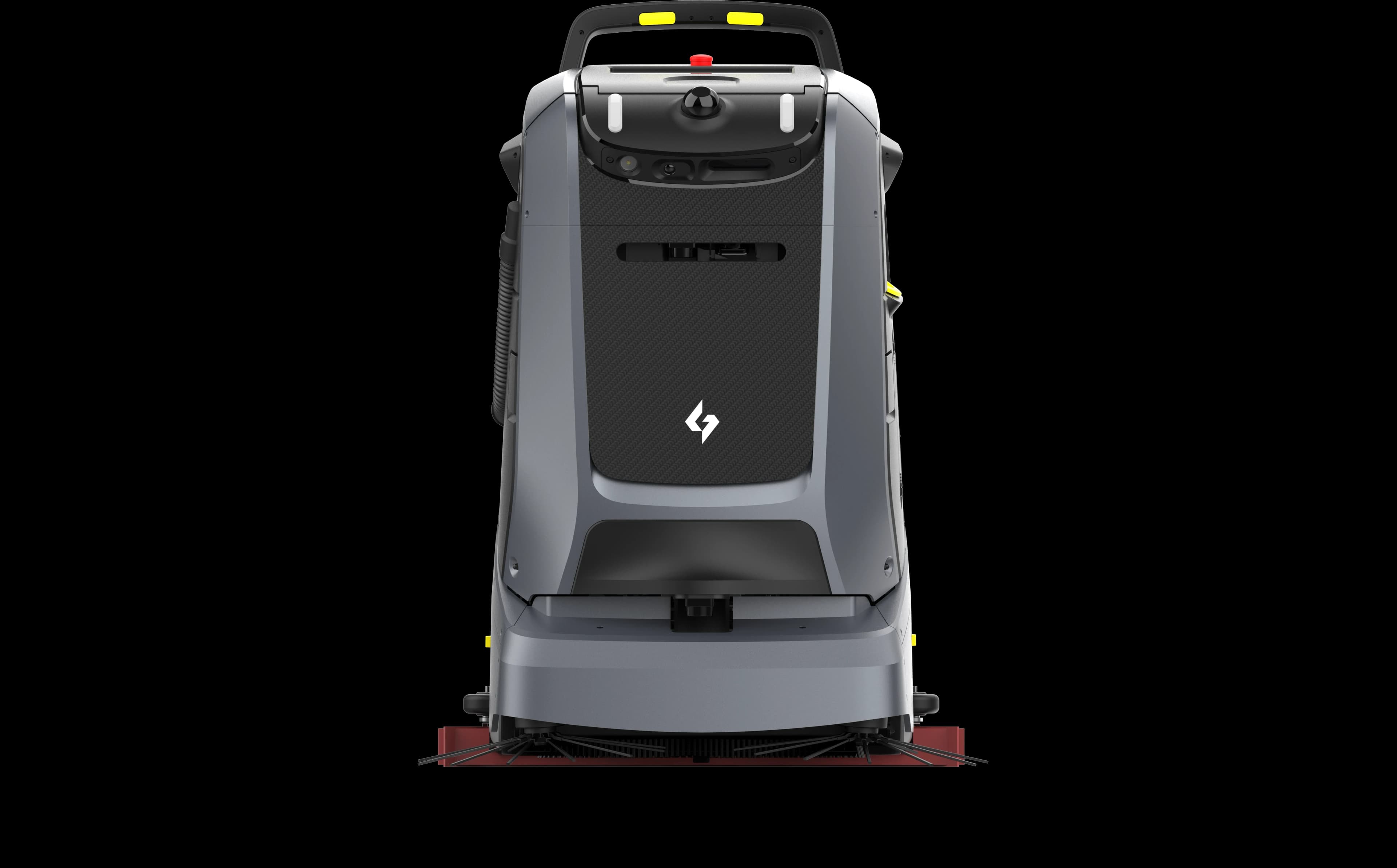
Most cleaning-robot business cases assume a floor that holds still: map it once, run the same path forever. A leisure centre does the opposite. The spin bikes move for a class, the multipurpose hall becomes a birthday party, the group-fitness studio is a yoga room at 6am and a boxing floor at 6pm — and the change rooms and wet concourse are grimy from open to close. On a floor with a five-hour window and no forgiveness, the machine that wins is not the cheapest one. It is the one that clears the floor with hours to spare, so a spill or a late class can't push it past opening time.

The brief
A regional aquatic & leisure centre: a 24-machine gym floor, two group-fitness studios, a multipurpose hall, a foyer and café, the wet concourse and pool surround, two change-room blocks, and back-of-house corridors. About 5,400 m² of cleanable hard floor in total — rubber and vinyl on the gym floor, sprung timber and vinyl in the studios, tiles through the wet areas and change rooms.
The operating constraints were the whole problem:
- The empty window is short. Something is open almost twenty hours a day. The genuinely dead block — pool closed, gym locked, studios dark — is about five hours overnight, roughly 11pm to 4am.
- The floor never sits still. Studios and the hall are re-set daily for classes and events. A mapped robot handles the moved furniture as obstacles, but a machine you can just set down with no mapping step at all is one less bit of daily friction for the duty manager.
- The floor drags in grit. Sand from the car park, grass off the sports field, hair and lint from change rooms — a machine has to sweep and scrub in one pass, or it just smears the debris around.
- Aisles are tight. Change-room runs and the gap between equipment rows sit around 65–70 cm of clear width.
Today the centre spends about 10.0 labour-hours a day on hard floors and still skips the far corners of the concourse on busy nights.
The shortlist
Four machines could plausibly clean this floor. Only one fit all four constraints.
| Model | Effective (spec-derated) | Sweep + scrub | Runtime | Min aisle | Indicative price | Verdict |
|---|---|---|---|---|---|---|
| Gausium Mira | ~770 m²/h | ✅ single pass | 4 h | 66 cm | ~A$49,200 | ✅ Chosen |
| PUDU CC1 | ~435 m²/h | ✅ | 5 h | 70 cm | ~A$30,100 | Cheaper — but runs the window flat-out (see below) |
| Gausium Scrubber 50 Pro | ~460 m²/h | ✅ | 3 h | 80 cm | ~A$70,600 | Too wide for change-room aisles; 3-hour battery |
| CenoBots L3 | ~770 m²/h | ❌ scrub only | n/p | 70 cm | ~A$32,800 | Scrub-only smears tracked-in grit |
Every coverage figure above is on the same basis — manufacturer spec × a real-world derate (0.6, or 0.45 for a theoretical-max rating) × the window-duty factor — so no machine is credited with a number the others can't match.
Read that table the way an operations manager has to. The cheapest autonomous option is the PUDU CC1 — a genuinely excellent scrubber that sweeps and scrubs, and it pays back fastest. Its catch here is throughput: at ~435 m²/h effective, a two-unit CC1 fleet needs almost the entire five-hour window to clear the floor (about 4.85 of 5 hours), so it runs flat-out to the last minute. The premium option, the Scrubber 50 Pro, can't thread an 80 cm minimum-aisle body down the tightest change-room runs and its 3-hour battery forces a mid-window recharge. And a plain scrubber-dryer like the CenoBots L3 skips the sweep step entirely, so it drags grit across the tiles instead of lifting it. (Note the aisles: at 65–70 cm clear width, both the Mira at 66 cm and the CC1 at 70 cm are marginal at the tightest point, and the last stalls stay a manual job either way.)
The Mira wins on the thing a five-hour window with no forgiveness actually rewards: at ~770 m²/h effective it clears its share of the floor in under three hours, leaving real slack for a spill, a stuck door or a late class packing down — where the cheaper CC1 runs almost to the opening bell. Drop & Go (no pre-mapping to deploy) is a genuine secondary convenience on a floor that reconfigures often, though not the decider on its own.
Sizing the fleet
Specs get you to a shortlist; the derate decides the fleet. We size every brand on the same basis — manufacturer spec × a real-world derate — so no machine gets credit for a number the others can't match. The Mira's 2,016 m²/h is a theoretical maximum, so it takes the tighter derate, landing at a realistic ~770 m²/h effective (2,016 × 0.45 × 0.85).
The Mira is a hard-floor machine, so the carpeted creche and lounge (not part of the 5,400 m² hard-floor total) stay a separate vacuum or manual job. Shaded zones are the ~78% of the hard floor a robot can reach.
At ~770 m²/h effective, covering 4,200 m² — the 78% of the 5,400 m² hard floor a robot can actually reach — inside a five-hour overnight window works out to two Mira units, each clearing about 2,100 m² a night in roughly 2.7 hours of cleaning. That sits comfortably inside the 4-hour runtime, so neither machine needs a mid-pass recharge, and there's slack left for a daytime touch-up of the wet concourse. The remaining 22% — change-room stalls, the tight corner behind the pool plant, stairs, and the carpeted creche — stays manual, and always will.
Machine cost ÷ the same ~A$5,050 net monthly saving. The CC1 (2 units) is cheapest and pays back fastest, but runs the five-hour window flat-out. The Scrubber 50 Pro needs 3 units to clear the floor on its 3-hour battery, so its payback lands furthest out. The Mira (2 units) pays back slower than the CC1 and still won on headroom — it finishes with hours of slack. Shorter is better.
The money
Two Mira units at roughly A$49,200 each come to A$98,400, plus about A$2,600 to commission them and set up the fill-and-empty service point — A$101,000 all-in.
On the labour side, the hard-floor roster falls from 10.0 hours a day to 4.25: the robots displace about 6.75 hours of mopping and add back roughly 1.0 hour of tending, refilling and edge-detailing. At a blended loaded rate of about A$32/h across the overnight shift, that's about A$5,600 a month gross. Subtract around A$550 a month for power, brushes, pads and service across two machines and you land on a net A$5,050 a month.
A$101,000 upfront ÷ A$5,050 net monthly saving. Break-even lands at month 20.
What the model missed
Three things showed up in operation that no spreadsheet predicted.
-
Deployment simplicity mattered more than the spreadsheet showed. The business case was built on displaced labour hours. What the duty managers also valued was not administering a system — Drop & Go let them set the robot down in a re-configured studio with no mapping step. A mapped robot would have handled the same moved furniture as obstacles; the edge was avoiding setup friction, not a daily re-mapping chore.
-
Consistency helped the change-room odour. Duty managers put the persistent change-room smell down to intermittent hand-mopping. A robot scrubbing the same wet concourse and change-room floors every single night — at metered water, not a sloshed bucket — held the odour down in a way the old roster never did. That was the outcome members noticed, and it wasn't on the original spreadsheet.
-
The window has no forgiveness. Five hours, then the lap-swimmers arrive. The reason the higher-throughput Mira beat the cheaper CC1 on this site is that its ~770 m²/h clears the floor with slack; the cheaper CC1 at ~435 m²/h runs almost to the opening bell, with no room for a spill, a stuck door, or a late class packing down. Headroom, not price, is what protects an opening time here.
Would it work for your centre?
Gyms and leisure centres are a deceptively hard cleaning-robot case, because the binding constraint is rarely area — it's a floor that changes shape daily, a short window, and wet, gritty, high-traffic tiles. The machine that wins is rarely the cheapest one on the shortlist.
- Run your own centre through the Fleet & ROI Planner to see the payback on your floor area, your window, and your wage rates.
- Or tell us about your site and we'll send a vendor-neutral shortlist with indicative pricing.
Frequently asked questions
- Can one cleaning robot handle a gym and its change rooms?
- On hard floors, largely yes. In this composite a sweep-and-scrub robot like the Gausium Mira ran at ~770 m²/h effective and two units covered ~4,200 m² (78%) of a 5,400 m² leisure centre; carpeted zones and tight change-room stalls stayed a manual or vacuum job.
- Why a sweep-and-scrub robot instead of a plain scrubber for a gym?
- Gym floors carry tracked-in grit, sand and hair. A scrub-only machine smears that debris across the floor, while a single-pass sweep-and-scrub lifts it first, so you don't need a separate sweeping run.
- How long until a cleaning robot pays for itself in a leisure centre?
- In this composite, two robots at about A$101,000 all-in displaced roughly 5.75 hard-floor labour-hours a day (10.0 → 4.25), saving about A$5,050 a month net and paying back in around 20 months.
- Do cleaning robots work on carpet in gyms?
- The Gausium Mira is a hard-floor wet scrubber and does not clean carpet. Carpeted lounges, creches and matted areas need a separate vacuum robot or stay manual.
- What does 'Drop & Go' mean for a leisure centre?
- It means the robot needs no pre-mapping to deploy — you set it down and it cleans. A mapped robot handles moved furniture as dynamic obstacles too, and only needs re-mapping for a structural change, so Drop & Go is an operational-simplicity edge rather than a hard requirement here.
Put these numbers to work
See which robot fits your facility and what it would save you.
Run the Fleet & ROI Planner