All robots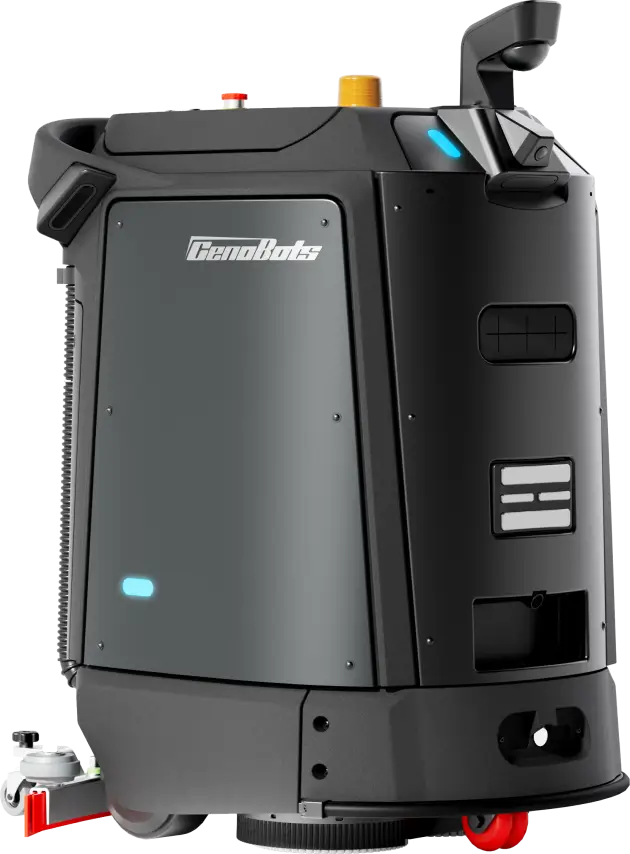
CenoBotsScrubber
CenoBots L3
Compact autonomous scrubber-dryer with voice command and follow-me mapping. Positioned against PUDU CC1 / Gausium Phantas.
MopScrub
Coverage
2,016 m²/h (theoretical max)
Clean width
400 mm
Runtime
—
Weight
—
Why it stands out
- High-resolution 96-beam LiDAR + 100 TOPS AI
- Voice command + follow-me mapping
- Compact 400 mm deck for tight spaces
Full specifications
| Coverage (published) | 2,016 m²/h (theoretical max) |
| Cleaning functions | Mop, Scrub |
| Floor types | hard |
| Clean width | 400 mm |
| Clean / recovery tank | 25 / 25 L |
| Dust bin | n/a |
| Battery | — |
| Runtime per charge | — |
| Charging time | — |
| Max speed | — |
| Navigation | 96-beam 3D LiDAR + 3D depth (NVIDIA 100 TOPS) |
| Obstacle avoidance | 3D depth camera + bumper + IMU |
| Gradeability | — |
| Threshold crossing | Not published |
| Min aisle width | 70 cm |
| Noise | Not published |
| IP rating | Not published |
| Weight | — |
| Dimensions (L×W×H) | 765 × 572 × 1000 mm |
| Auto water dock | No |
| Elevator / multi-floor | No |
Manufacturer-published specs (source: cenobots.com/products/l3). “Not published” = the maker doesn't disclose it; we don't estimate those.
How many would your site need?
Measure your floor area from a plan, then size a fleet and see the labour it saves. ROI & payback included.
Pricing:est. A$ 32,832 ex-GST · RobotLAB US$24,000 → AUD ×0.9
Where we've sized the CenoBots L3
Worked examples with fleet counts, labour displaced and payback.
- Industry InsightsPUDU vs Gausium vs CenoBots: 17 Machines, One Rule, Three Different WinnersWe put every comparably-priced machine in our catalogue on one derated throughput basis and one AUD footing. No brand wins every class — and the assumptions that decide the close calls aren't printed on any spec sheet.
- Case StudyOne Robot Model Across Six Hotels: 9 Units, 100% Daily Floor, 24-Month PaybackA composite case study: a six-property hotel group standardising on one autonomous scrubber so the floor looks the same at 3pm everywhere. Why the cheapest machine and the fastest machine both lost, and the group-wide payback math.
- Case StudyOne Model, 20 Supermarkets: 14 Months to Pay Back — 111 at the Smallest SixA composite case study: standardising a 20-store Australian grocery estate on a single PUDU CC1 Pro per site. The estate pays back in 14 months — but the same robot takes 8 months in a large-format store and 111 in a metro one.
- Industry InsightsWhy Your Cleaning-Robot Pilot Says 7-Month Payback When the Real Number Is 14A 30-day trial measures the honeymoon. Here is the 8-week pilot design — and the four deductions — that turn a robot trial into a payback number a CFO can extrapolate.