One Robot Model Across Six Hotels: 9 Units, 100% Daily Floor, 24-Month Payback
A composite case study: a six-property hotel group standardising on one autonomous scrubber so the floor looks the same at 3pm everywhere. Why the cheapest machine and the fastest machine both lost, and the group-wide payback math.
By WhichBot Team
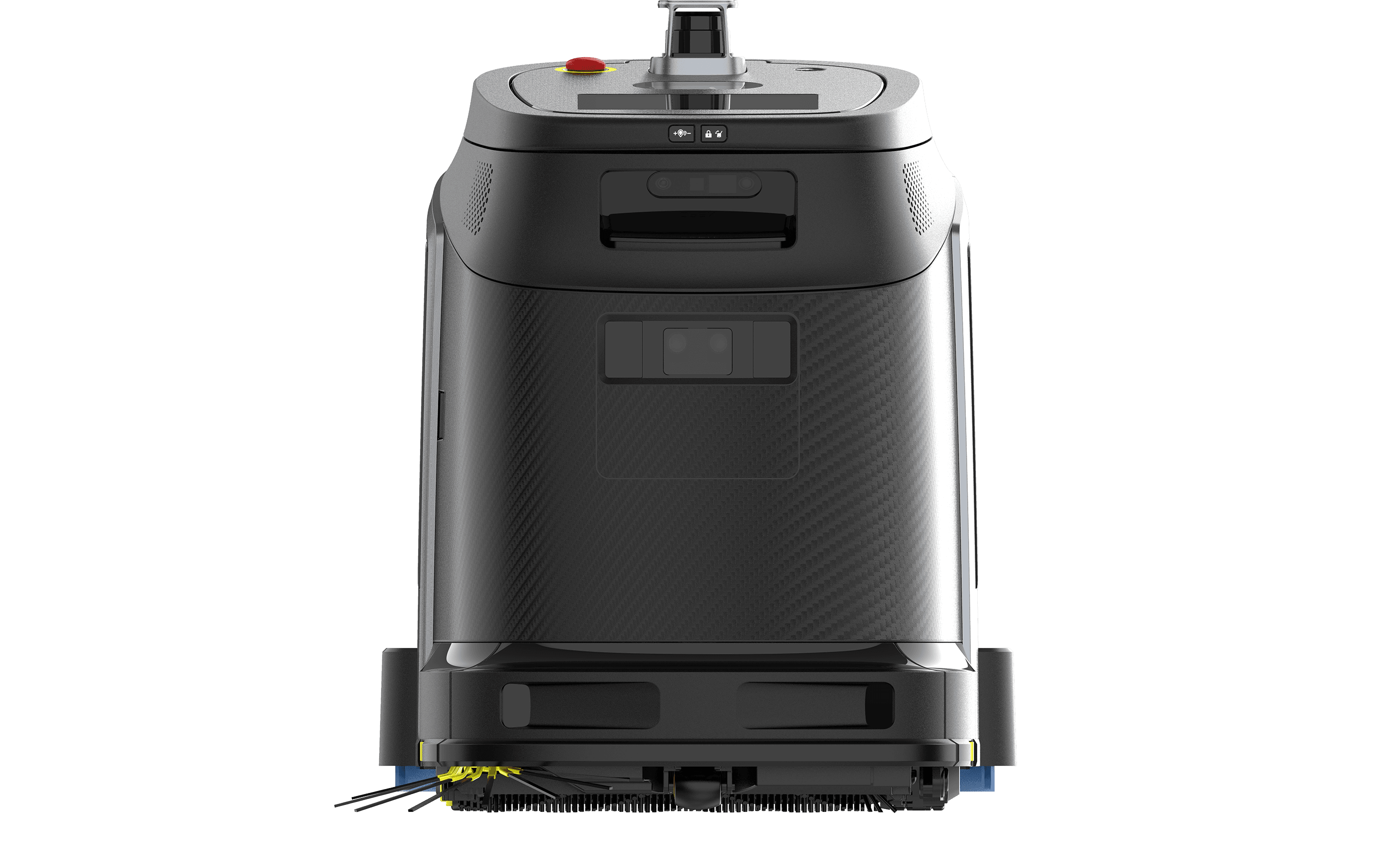
A six-property hotel group came to us with an audit problem, not a robot problem. Their brand standard says the public floor looks the same in every property at every hour. In this composite it didn't — two properties passed comfortably; two failed the same line item every quarter. Nobody could tell them whether the gap was people, hours or floor plan. We ran all six sites through the Fleet & ROI Planner. The answer was nine Gausium Phantas units on one spec across the group, paying back in about 24 months — and the machine that won had neither the lowest price nor the fastest payback.
The brief
The six properties are the same product at different scales — 1,700 m² to 3,100 m² of hard floor each, 14,400 m² across the group. The zone mix repeats everywhere, and so does the coverage problem.
Group totals: 3,900 m² lobby and atrium, 2,800 m² F&B, 4,300 m² lift lobbies and hard-floor corridors, 3,400 m² back-of-house. Weighted, about 11,250 m² — 78% — is robot-reachable. Back-of-house is where reach collapses: galley behind the bar, stairwells, the tight corner of every loading dock. That 22% stays a manual job in all six properties.
Four constraints applied everywhere, and the group had to size on the worst case of each, not the average:
- No closed window. The genuinely empty slot is 1am–5am; everything else is guest-facing. A night-only machine fixes half the problem — and the failing audit line item was a mid-afternoon one.
- Under 80 cm. Every hard-floor corridor, lift lobby and back-of-house service run in the group is under 80 cm of built clear width before anything is parked in it — the tightest about 72 cm. A machine that fits five properties and not the sixth is not a standard.
- One level per property. Every robot-served zone sits on one continuous ground-level floorplate. The Phantas has no lift integration, and the guest-room corridors upstairs are carpeted anyway — a vacuum job, sized separately.
- Hours bought, not hours needed. The group rosters about 31 labour-hours a day on hard floors. At the 400 m²/h hand-mop rate we hold every manual comparison to, that buys 12,400 m² of cleaning against 14,400 m² of floor. About 2,000 m² a day gets skipped — and it is never the same 2,000 m².
That last line is the audit problem stated as arithmetic. The properties weren't inconsistent because their staff were, but because the roster ran ~14% short of the floor and each duty manager chose a different shortcut.
The shortlist
We screened the catalogue for autonomous wet scrub-capable machines publishing both a runtime and a minimum aisle of 80 cm or less — you cannot schedule a two-block day around a runtime we don't hold. Six cleared; four are in the table. The CenoBots L3 fits the corridor comfortably at 70 cm but our catalogue holds no runtime for it, so it drops out on missing data rather than on capability — which is why no CenoBots machine appears below. The CC1 Pro shares the CC1's rated coverage and aisle, so the two size identically and the cheaper stands for both; of the two machines that clear at exactly 80 cm we carried the Scrubber 50 Pro over the Gausium Omnie, at nearly A$100,000 a unit.
Every rate below is the manufacturer's published coverage put through the same treatment — a 0.6 real-world derate for a practical published range, 0.45 where the vendor publishes a theoretical maximum, then a further 15% off for docking, refills and zone transitions inside the window. Nobody is compared on a friendlier basis than anyone else.
| Model | Rated → in-window rate | Runtime | Min aisle | Noise | Unit price | Group fleet & capex |
|---|---|---|---|---|---|---|
| Gausium Phantas | 350–700 → 268 m²/h | 4.5 h | 65 cm | 60 dB | ~A$44,597 | 9 units · A$401,373 |
| Gausium Mira | 2,016* → 771 m²/h | 4 h | 66 cm | none held | ~A$49,246 | 6 units · A$295,476 |
| PUDU CC1 | 700–1,000 → 434 m²/h | 5 h | 70 cm | 70 dB | ~A$30,096 | 10 units · A$300,960 |
| Gausium Scrubber 50 Pro | 500–1,300 → 459 m²/h | 3 h | 80 cm | none held | ~A$70,589 | 6 units · A$423,534 |
*published as a theoretical maximum, so it takes the tighter 0.45 derate.
One note on the prices, because they are not built the same way. The Phantas, CC1 and Scrubber 50 Pro are US list figures converted at an indicative rate and cut 10%. The Mira comes from a retailer whose base configurations run about 20% under that footing, so we level it up 20% before converting — an adjustment that only ever moves a Gausium price upward. It matters here: undo it and the Mira is about A$41,000 a unit — cheaper than the Phantas we recommend — a six-unit fleet near A$246,000, with a payback nearer 13 months than 16. The machine we chose is not the cheap one on any basis, and the gap to the fastest option is wider than the chart below shows.
The Scrubber 50 Pro is out on the second constraint: at 80 cm it cannot enter the corridors, lift lobbies or back-of-house, each under 80 cm clear or reached only through a run that is. It keeps the lobby and F&B floors — about 6,000 m² group-wide — and leaves 8,400 m² to the mops.
The CC1 is the cheapest autonomous machine here and an excellent supermarket robot. At 70 dB it is a 1am–5am machine in a hotel, which collapses its window from eight hours to four and pushes the group to ten units.
The Mira is the interesting one: faster, fits the corridor, and on these numbers it pays back soonest. It also has no auto refill/drain dock — a person fills and empties it by hand, every property, every run — and our catalogue holds no noise figure for it. Be precise about what that is: the "maker doesn't publish it" reading of a blank is documented for PUDU only, so for a Gausium row it means a gap in our data, not a gap in the vendor's sheet. Either way you cannot underwrite a 3pm promise with a number you don't have — but the fix is to ask Gausium for it, not to mark the machine down.
Sizing the group
At 268 m²/h in-window, a Phantas clears about 1,850 m² across an 8-hour day split into a 1am–5am block and a four-hour afternoon block. (The engine bills a mid-window recharge; splitting the window means it charges in the gap instead, so 1,850 m² is conservative.)
| Property | Hard floor | Robot-reachable | Units |
|---|---|---|---|
| A | 1,700 m² | 1,330 m² | 1 |
| B | 2,050 m² | 1,600 m² | 1 |
| C | 2,300 m² | 1,800 m² | 1 |
| D | 2,450 m² | 1,910 m² | 2 |
| E | 2,800 m² | 2,190 m² | 2 |
| F | 3,100 m² | 2,420 m² | 2 |
| Group | 14,400 m² | 11,250 m² | 9 |
Property C is the one to watch: at 1,800 m² it sits about 50 m² under the line for one machine — a summer marquee on the terrace tips it to two.
The money
Nine units at ~A$44,597, plus mapping, plumbing each refill/drain workstation into a back-of-house floor drain, and training at about A$1,860 a machine — our own deployment assumption, not a catalogue figure — comes to roughly A$418,113.
On the labour side the hard-floor roster falls from 31 hours a day to 13.3 — 7.9 hours of manual detail on the 3,150 m² no robot reaches, plus 5.4 hours tending nine machines (a flat 0.6 supervision-hours per machine per day — our figure, not the engine's). On the engine's own rule — eight minutes per robot cleaning hour — the Phantas fleet would be charged 5.6 hours rather than 5.4, and every faster rival would be charged less than the flat rate we used: the CC1 lands near 17 months, the Mira near 14 and the Scrubber 50 Pro near 55, against the 19, 16 and 72 in the chart below. A flat per-machine rate is roughly right for the slowest machine on the list and generous to us against the quick ones, so read the gaps as smaller than they look. That is 17.7 hours a day at a blended loaded rate of about A$34/h, or A$18,305 a month gross. Take off A$900 for power, brushes, squeegees and service and the net is A$17,400 a month — while daily coverage goes from 86% of the floor to 100%.
A$418,113 upfront ÷ A$17,400 net monthly saving — break-even at about 24 months. The audit-score improvement that triggered the project is upside we left out entirely.
Payback = upfront ÷ net monthly saving, every option sized on the same derated basis. The chosen machine came third. The Mira figure excludes the manual fill-and-empty labour its lack of an auto dock creates; the Scrubber 50 Pro's 72 months is what happens when an 80 cm machine is priced against a corridor-heavy building — it's the wrong tool here, not a bad one.
What the standard actually bought
The group paid roughly eight months of extra payback over the fastest option. What it bought was a promise it could audit: the same machine, map spec and two-block schedule in all six properties — one spares kit instead of three, one training package, and a floor scrubbed at 3pm, not just at 3am.
Two things we'd expect to matter that the model doesn't price. Trolley bays beat better software — fixed bays should do more for the exception rate than any amount of routing cleverness. And the smallest property was the hardest: at 1,330 m² of reachable floor one unit has slack, and slack invites scope until the schedule stops closing.
Would it work across your properties?
Group standards live or die on the worst site, not the flagship. That is exactly what the planner is built to test.
- Run each property through the Fleet & ROI Planner to size the group on your own floor areas, windows and wage rates.
- Or tell us about your portfolio and we'll send a vendor-neutral shortlist with indicative pricing.
Frequently asked questions
- Should a hotel group standardise on one cleaning robot model across all its properties?
- Standardise on the model that clears the constraints of your hardest property, not the average one. In this six-property composite that meant one Gausium Phantas spec across all six sites — 9 units total — because it was the only shortlisted machine both narrow enough for a 72 cm corridor and carrying a published noise figure — 60 dB — low enough to underwrite a daytime block. One model means one spares kit, one training package and one exception dashboard across the group.
- How many cleaning robots does a six-property hotel group need?
- Nine, in this composite. The six properties hold 14,400 m² of hard floor, of which about 11,250 m² is robot-reachable. On the uniform basis we apply to every brand — manufacturer rated coverage × 0.6 × an 85% in-window duty — a Gausium Phantas works at about 268 m²/h, or roughly 1,850 m² across an 8-hour split window. The three smaller properties take one unit each; the three larger take two.
- Which cleaning robot is quiet enough to run in a hotel lobby during the day?
- The Gausium Phantas publishes a 60 dB quiet mode — about the level of ordinary conversation — which is what makes a daytime block defensible in a guest-facing space. The PUDU CC1 and CC1 Pro are rated 70 dB, which confines them to a closed overnight window in a hotel. Our catalogue holds no noise figure for several other machines — a gap in our data rather than a finding about those vendors — and you cannot write a daytime brand standard on a number you don't have. Ask the vendor for it before you rule anything in or out. ublished.
- What's the payback on cleaning robots across a hotel group?
- About 24 months here: roughly A$418,113 upfront for nine Gausium Phantas units plus mapping, workstation plumbing and training, against about A$17,400 a month of net displaced labour. Group-wide hard-floor hours fall from 31 a day to 13.3, while daily coverage rises from 86% of the floor to 100%.
- Why doesn't the cheapest cleaning robot win a group standard?
- Because a group standard buys a guarantee, not a machine. On the same basis the PUDU CC1 pays back in about 19 months and the Gausium Mira in about 16 — both faster than the 24-month winner. The CC1 is night-only at 70 dB and the Mira has no auto refill/drain dock, so neither can underwrite the thing the group was actually buying: an identical-looking floor at 3pm in all six properties.
Put these numbers to work
See which robot fits your facility and what it would save you.
Run the Fleet & ROI Planner