One Model, 20 Supermarkets: 14 Months to Pay Back — 111 at the Smallest Six
A composite case study: standardising a 20-store Australian grocery estate on a single PUDU CC1 Pro per site. The estate pays back in 14 months — but the same robot takes 8 months in a large-format store and 111 in a metro one.
By WhichBot Team
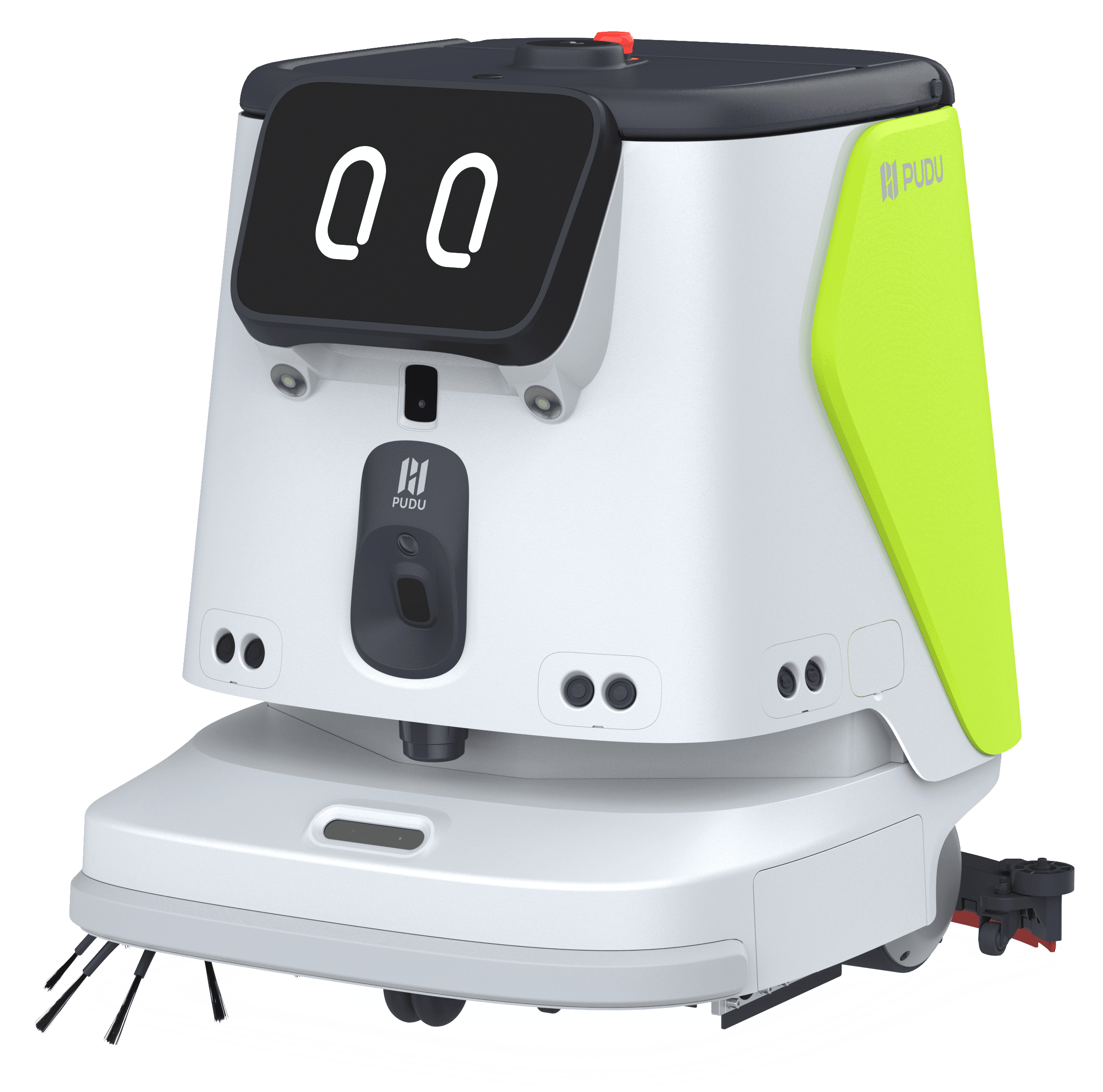
Worked example. This is an illustrative composite of an Australian grocery chain — no named customer. Store formats and floor areas are modelled through our Fleet & ROI Planner on indicative pricing, sizing every brand on the same spec-derated basis. To reproduce the numbers: run each format separately and sum, in wet-clean mode, with Robot reach at 100% (we have already netted off the floor a wheeled machine can't get to), Deployment on full coverage, a 5-hour window, 313 cleans a year and 0.5 h/night of attended time per robot. Labour is a fully-loaded A$35/hour throughout — a A$28 wage plus 25% on-costs.
Standardising an estate on one cleaning robot is the right call and the estate number is a liar. Twenty stores, one PUDU CC1 Pro each, A$656,640 of capex — and a blended 14-month payback that no individual store in the estate actually experiences. Three stores get there in eight months. Six take 111.

The brief
The chain runs 20 single-level supermarkets in three formats. Every store closes by 10pm, the night crew works to a five-hour window before the 5am restock, and floors are washed six nights a week — 313 cleans a year. Night labour is the line under pressure: the loadings that apply after midnight are the reason a nominal award cleaner costs a fully-loaded A$35/hour on this shift, and that rate is the conservative end.
The estate wanted a single answer, not twenty. One model, one map procedure, one spares kit, one training package.
| Format | Stores | Robot-reachable floor | Nightly hand-mopping |
|---|---|---|---|
| Metro / convenience | 6 | ~330 m² | ~50 min |
| Standard suburban | 11 | ~1,450 m² | ~3 h 38 min |
| Large format | 3 | ~2,100 m² | ~5 h 15 min |
Nightly mopping is the reachable area at the planner's manual wet rate of 400 m²/h. Note how little of a supermarket a wheeled machine actually gets to — roughly 56% of a standard store's floor:
Zone-weighted, the robot reaches 1,453 m² of 2,600 m² — the ~1,450 m² we size on. The two dashed zones are the honest gaps: behind service counters is congested, drained and full of sub-70 cm gaps the 500 mm deck can't enter, and the dock is pallets and cool-room thresholds. Both stay a manual job, in every store, forever.
The shortlist
Grocery floors carry dry debris — produce trimmings, packaging dust, spilled product — under the wet mess. That rules out mop-only machines, which turn dry debris into slurry and push it to the kerbs. We need a wet machine that lifts solids before it wets the floor, sized on the same basis for every brand.
| Model | Type | Effective rate* | Units for 20 stores | Indicative fleet capex |
|---|---|---|---|---|
| PUDU CC1 Pro | Wet 4-in-1: sweep + vacuum + mop + scrub | ~434 m²/h | 20 | A$656,640 |
| PUDU CC1 | Wet 4-in-1, same hardware | ~434 m²/h | 20 | A$601,920 |
| CenoBots L3 | Wet scrubber — mop + scrub only | ~771 m²/h | 20 | A$656,640 |
| Gausium Scrubber 50 Pro | Wet 3-in-1: sweep + mop + scrub | ~459 m²/h | 23 | A$1,623,547 |
| Gausium Phantas | Wet 4-in-1, compact | ~268 m²/h | 34 | A$1,516,298 |
*Effective rate = manufacturer rated coverage (midpoint of any range) × uniform derate × 0.85 window duty — the same engine basis for every brand. Vendors publishing a bare theoretical maximum take the tighter 0.45 derate (here, only the CenoBots L3's 2,016 m²/h); practical ranges take 0.60. Unit prices A$32,832 / A$30,096 / A$32,832 / A$70,589 / A$44,597 ex-GST.
Three things fall out of that table.
CC1 and CC1 Pro size identically. They share the same 700–1,000 m²/h cover-cleaning spec, so on our uniform basis both answer "one unit per store" and both run a standard floor in ~3 h 20 min. The Pro's extra spot-cleaning mode (1,500–3,000 m²/h) is real, but it does nothing for the nightly full-coverage job and we give it no ROI credit. The estate chose it anyway, for a daytime problem: a produce or dairy breakage during trading is a slip hazard someone has to walk to, and a machine already on site can be sent instead. That preference costs A$54,720 across 20 units and 1.2 months of payback — the CC1 fleet pays back in 13.0 months against the Pro's 14.2.
CenoBots L3 is the cheap trap. Same fleet capex as the CC1 Pro, a much higher derated rate — and it only mops and scrubs, on a floor whose first problem is dry debris.
Gausium's machines are genuine peers priced for a different job. The Scrubber 50 Pro brings lift integration the CC1 family lacks, worth real money in a multi-level site and nothing in twenty single-level ones — for A$966,907 more. The Phantas is the quietest wet machine we list at 60 dB against the CC1 Pro's 70, which would matter if these stores ran the nightly clean during trading. They don't.
The money
One CC1 Pro sustains ~434 m²/h, which across a five-hour window is about 2,168 m² a night — enough for every format. That is the whole battery, not a comfortable slice of it: the 2,100 m² large store's 4.8-hour run fits inside the ~5-hour scrubbing runtime with nine minutes to spare. No mid-window recharge, and no headroom either. Across the estate that displaces 15,830 hours a year net of supervision, or A$554,049 at A$35/hour: A$46,171 a month.
A$656,640 upfront ÷ ~A$46,171 net monthly saving — break-even at about 14.2 months across the estate.
Now split it by format, and the average stops being useful:
Each store carries one A$32,832 unit and 0.5 h/night of attended time. Payback per store: large format ~8 months, standard suburban ~12 months, metro ~111 months. The six metro stores hold A$196,992 of capex earning A$297 a month each.
A metro store's entire nightly mop is 50 minutes. Take half an hour of attended time out of that and 20 minutes a night is left — real, but not a robot's worth.
Half an hour is a punitive assumption on a 330 m² floor, so we re-ran the estate on our documented modelling assumption of 8 minutes of attended time per robot cleaning hour — 0.10, 0.45 and 0.65 h a night for metro, standard and large. Metro payback moves from 111 months to 50, standard to 11, large to 8, and the estate to 13.5. That halves the metro gap and still leaves those six at more than four times the standard-store payback, well outside the 12–28 months this chain treats as investable. Either way the blended number is arithmetically true and operationally misleading: it is the large and standard stores paying for the metro ones.
What the rollout actually taught them
- Sequence by payback, not by geography. The three large-format stores went first, the eleven standard stores next, and the metro six were deferred to the next lease cycle rather than bought for the sake of a tidy estate. Same model, same procedure — just not yet.
- The dock is the rollout's critical path, not the robot. The CC1 Pro's dock auto-refills water, drains the waste tank and doses detergent, which is exactly what lets it run unattended. It also needs a tap and a floor drain where you want it parked. Twenty stores meant twenty small plumbing jobs, and they took longer to schedule than the machines took to deliver.
- Standardisation pays in the boring places. One model meant one map procedure, one spares kit, one training package — and a relief unit from any store fits any other. It also saves water: at a uniform 4 ml/m² against 100 ml/m² for hand-mopping, the fleet avoids roughly 728,000 litres a year.
Add a fourth trading hour and the whole plan moves: a four-hour window drops per-robot capacity to ~1,734 m², and the three large-format stores need a second unit each — 23 robots, not 20. Window length, not clean rate, is what sizes a grocery fleet.
Would it work for your estate?
The honest answer depends on your reachable floor, your window and your wage rates — which is what the planner is for.
- Run your stores through the Fleet & ROI Planner to see which formats clear the bar on your numbers.
- Or tell us about your estate and we'll send a vendor-neutral shortlist with indicative pricing.
Frequently asked questions
- How long does a cleaning robot take to pay for itself in a supermarket?
- About 14 months across this composite 20-store estate — 20 PUDU CC1 Pro units at A$656,640 displacing roughly A$46,171 a month of night mopping. Individual stores vary enormously: a 2,100 m² large-format store pays back in about 8 months, a 330 m² metro store in about 111.
- How many cleaning robots does one supermarket need?
- One, for almost any single-level Australian supermarket. On a uniform spec-derated basis a PUDU CC1 Pro sustains about 434 m²/h (the 700–1,000 m²/h rated midpoint × 0.6 derate × 0.85 window duty), or roughly 2,168 m² inside a five-hour overnight window — enough for every format in this composite estate, the largest of them with 68 m² to spare.
- Should a grocery chain standardise on one robot model across every store?
- For a single-level estate, yes — one model means one mapping procedure, one spares kit, one training package and one support contract across the whole rollout. The exception is not the machine, it is the store: any site whose nightly saving is under about an hour takes three years or more to repay a A$32,832 unit, and no amount of standardisation changes that.
- How much of a supermarket floor can a cleaning robot actually reach?
- About 56% in this composite — 1,453 m² of a 2,600 m² standard suburban store. Grocery aisles, the chilled run, produce and the checkout runway come in at 70–90% coverage; behind deli and service counters, and across the back dock and cool rooms, coverage collapses below 10% and stays a manual job.
- What does a store need before a scrubber dock can be installed?
- A tap and a floor drain within reach of the dock position. The PUDU CC1 Pro's dock automatically refills clean water, drains the 15 L waste tank and doses detergent, which is what keeps the machine unattended overnight — but it is a small plumbing job per site, and across 20 stores it is the item most likely to hold up a rollout.
Machines in this analysis
Full spec sheet and indicative Australian pricing for each.


Related reading
- Case StudyHow a 12,000 m² Supermarket Cut Nightly Cleaning Costs 38%A composite case study: shortlisting three autonomous scrubbers for a mid-size grocery store, the deployment, and the real payback math from our Fleet & ROI engine.
- Case StudyOne Robot Model Across Six Hotels: 9 Units, 100% Daily Floor, 24-Month PaybackA composite case study: a six-property hotel group standardising on one autonomous scrubber so the floor looks the same at 3pm everywhere. Why the cheapest machine and the fastest machine both lost, and the group-wide payback math.
- Case Study24 Quick-Service Sites, Two Cleaning Robots — Neither in a RestaurantA composite case study: we ran a 24-site Australian QSR estate through the Fleet & ROI engine on one uniform basis. Twenty-two restaurants sat below the 200 m² break-even; the chain's commissary cleared a 17-month payback on two PUDU CC1s.
Put these numbers to work
See which robot fits your facility and what it would save you.
Run the Fleet & ROI Planner