Why Your Cleaning-Robot Pilot Says 7-Month Payback When the Real Number Is 14
A 30-day trial measures the honeymoon. Here is the 8-week pilot design — and the four deductions — that turn a robot trial into a payback number a CFO can extrapolate.
By WhichBot Team
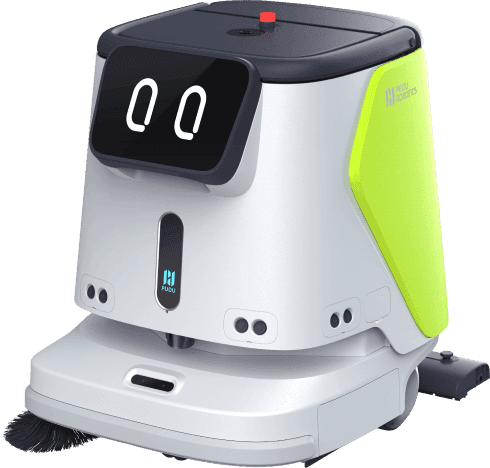
Most cleaning-robot pilots end with a number that does not survive the finance team. The robot works, the dashboard reports thousands of square metres cleaned, someone divides the purchase price by the manual-equivalent labour and announces a seven-month payback. Then the roster is re-cut and the saving is half what was promised. The fix is not a better robot — it is a pilot designed to produce the number after four deductions, not before.
A pilot is a measurement instrument, not a demo
Vendors like 30-day trials because 30 days is roughly the length of the honeymoon. Weeks one to three are mapping, tuning and hand-holding; assists per run are still falling when the trial ends. Whatever you extrapolate from that window is a learning curve, not a steady state.
Eight weeks is the minimum that produces extrapolable data, and the shape matters more than the length — you need a hand-cleaned baseline before the robot arrives, and at least three weeks where nobody babysits it.
- Weeks 1–2 · BaselineHand-clean the zone. Time it, log the roster, photograph the result. No robot on site.
- Week 3 · Map & commissionMap the zone, site the dock (wet models need water + a floor drain), train two supervisors.
- Weeks 4–5 · SupervisedNightly runs with a person nearby. Log every assist and why.
- Weeks 6–8 · UnattendedNo babysitting. This is the only period that predicts steady state.
- End of week 8 · Read-outApply the four deductions, then extrapolate to the whole site.
A 30-day trial stops inside the supervised phase — before assist rates flatten. The last three weeks are the data you are actually buying.
Size the zone to one robot, one window
The most common scoping error is handing the robot more floor than it can clear in the cleaning window. You then measure a backlog and blame the machine.
Our worked site is a 2,200 m² single-level hard floor, cleaned five nights a week inside a five-hour window. Roughly 90% of it is genuinely robot-reachable once you subtract edges, under-fixture voids and tight corners — call it 1,980 m². On the uniform basis we use for every brand (manufacturer rated coverage × 0.6, × 0.85 window duty), a PUDU CC1 runs 434 m²/h, so it clears 1,980 m² in about 4.6 hours — inside the window, with slack.
That last column is where most shortlists fall over:
| Model | Rated coverage | Effective (uniform basis) | Clears 1,980 m² in one 5 h window? | Indicative price (ex-GST) |
|---|---|---|---|---|
| PUDU CC1 | 700–1,000 m²/h | 434 m²/h | Yes — 4.6 h, 2,170 m² of capacity | ~A$30,096 |
| Gausium Scrubber 50 Pro | 500–1,300 m²/h | 459 m²/h | Marginal — 3 h runtime forces a recharge; 1,928 m² | ~A$70,589 |
| Gausium Phantas | 350–700 m²/h | 268 m²/h | No — 1,298 m² of capacity | ~A$44,597 |
| CenoBots L3 | 2,016 m²/h (theoretical max) | 771 m²/h | On paper yes — runtime not published | ~A$32,832 |
Note what the higher headline rate does not buy. The Scrubber 50 Pro is the faster machine per hour, but a three-hour runtime inside a five-hour window means part of the night is spent charging, and its effective capacity lands just under the zone. Rated coverage without runtime is half a spec.
The four deductions
Here is the arithmetic that separates a pilot dashboard from a payback. Start with what the dashboard implies: 1,980 m² a night at the 400 m²/h manual mopping rate is 4.95 hours of manual-equivalent work, and at A$43.75 an hour fully loaded (A$35 base plus 25% on-costs) across 21.7 cleaning nights a month, that is A$4,699 a month. Then take it apart.
Same robot, same zone, same month. Each bar is the running total after one deduction. Less than half the headline survives.
- Handling and exceptions — A$578/month. The CC1's dock refills and drains its own water, but someone still empties the debris bin, clears a blocked route and reviews the run. Budget 8 minutes per robot cleaning hour: about 36.5 minutes a night here.
- Edges, corners and detail — A$1,175/month. A pass is not a clean. Roughly a quarter of the displaced open-floor time comes straight back as manual detail work.
- Roster granularity — A$573/month. This is the one pilots never model. After the first two deductions, 3.1 hours a night are genuinely freed — but rosters move in whole engagements, not decimals. The site removed one 2.5-hour nightly engagement; the remaining 0.6 hours stayed on the payroll and banked nothing.
- Consumables and service — A$100/month. Pads, brushes, detergent, filters and a service allowance.
What is left is A$2,273 a month of cash that a payroll report can verify.
The money
This is an illustrative composite built from our catalogue specs and pricing basis, not a named customer. Prices are indicative estimates, ex-GST.
One PUDU CC1 at roughly A$30,096, plus about A$2,400 for mapping, dock installation and supervisor training, is A$32,496 in the ground.
Break-even at ~14.3 months on A$32,496 upfront and A$2,273/month of verified saving. The same outlay against the pilot's raw A$4,699 claim would have shown 6.9 months — and missed by more than half a year.
Fourteen months is a good result. It is also a number that will still be true in month fifteen, which the seven-month version would not have been.
Write the deductions into the pilot agreement
Three clauses are worth insisting on before a robot arrives on site:
- Baseline first, in writing. Two weeks of hand-cleaned timings and roster hours, agreed by both sides. Without it, every later comparison is an argument.
- Assists get logged with a reason code. "Twelve assists in week four, three in week seven" is the single best predictor of whether the machine survives month six. A raw assist count without reasons tells you nothing you can fix.
- The read-out uses one basis for every candidate. Rated coverage × derate × window duty, applied identically — with the tighter derate where a vendor publishes a theoretical maximum rather than a practical range. Comparing one brand's measured fleet data against another's brochure figure is not a comparison.
And scope the pilot zone to what one robot clears in one window. If the zone is oversized, every number you collect is contaminated by the queue.
Run your own numbers
- Size the fleet and see the payback on your floor area, window and wage rates in the Fleet & ROI Planner.
- Or tell us about your site and we will send a vendor-neutral shortlist with a pilot design scoped to your cleaning window.
Frequently asked questions
- How long should a cleaning robot pilot run?
- At least eight weeks: two weeks of hand-cleaned baseline, one week of mapping and commissioning, two weeks supervised, and three weeks fully unattended. A 30-day pilot ends while operator-assist rates are still falling, so it measures the learning curve rather than steady state.
- What should a cleaning robot pilot actually measure?
- Five things: area actually cleaned per night, operator assists per run, robot handling minutes per night, the floor the robot cannot reach, and the roster hours that genuinely came off. Only the last one turns into money.
- Why is the payback from a robot pilot usually too optimistic?
- Because manual-equivalent hours get counted as cash. In a worked 1,980 m² example, A$4,699 a month of claimed saving became A$2,273 after handling time, edge and detail rework, roster granularity and consumables — moving payback from 6.9 months to 14.3.
- How big should the pilot zone be?
- Small enough that one robot clears it inside one cleaning window. A PUDU CC1 runs about 434 m²/h on a uniform spec-times-derate basis, so a five-hour window covers roughly 2,170 m². Scope above that and you are measuring a queue, not a robot.
- Does the pilot design change from brand to brand?
- No. Score every candidate on one basis — manufacturer rated coverage × 0.6 (× 0.45 where the figure is a theoretical maximum) × 0.85 window duty — and check runtime against the window, because a three-hour runtime forces a recharge a five-hour window cannot absorb.
Machines in this analysis
Full spec sheet and indicative Australian pricing for each.



Related reading
- Industry InsightsWhat a Cleaning Robot Really Costs Over 5 Years: A$44k, DecomposedThe sticker price is only two-thirds of the story. We break down the true five-year total cost of owning one PUDU CC1 — hardware, service, consumables, software and energy — and where the money actually goes.
- Industry InsightsPUDU vs Gausium vs CenoBots: 17 Machines, One Rule, Three Different WinnersWe put every comparably-priced machine in our catalogue on one derated throughput basis and one AUD footing. No brand wins every class — and the assumptions that decide the close calls aren't printed on any spec sheet.
- Industry InsightsThe Fleet-Dashboard Metric Worth A$1,392 a Month Per Cleaning RobotCoverage percentage is a vanity metric. Interventions per robot-hour is the number your ROI is actually computed from — worked through a PUDU MT1 across six distribution depots, plus what to demand from a vendor's fleet software before you sign.
Put these numbers to work
See which robot fits your facility and what it would save you.
Run the Fleet & ROI Planner