PUDU vs Gausium vs CenoBots: 17 Machines, One Rule, Three Different Winners
We put every comparably-priced machine in our catalogue on one derated throughput basis and one AUD footing. No brand wins every class — and the assumptions that decide the close calls aren't printed on any spec sheet.
By WhichBot Team
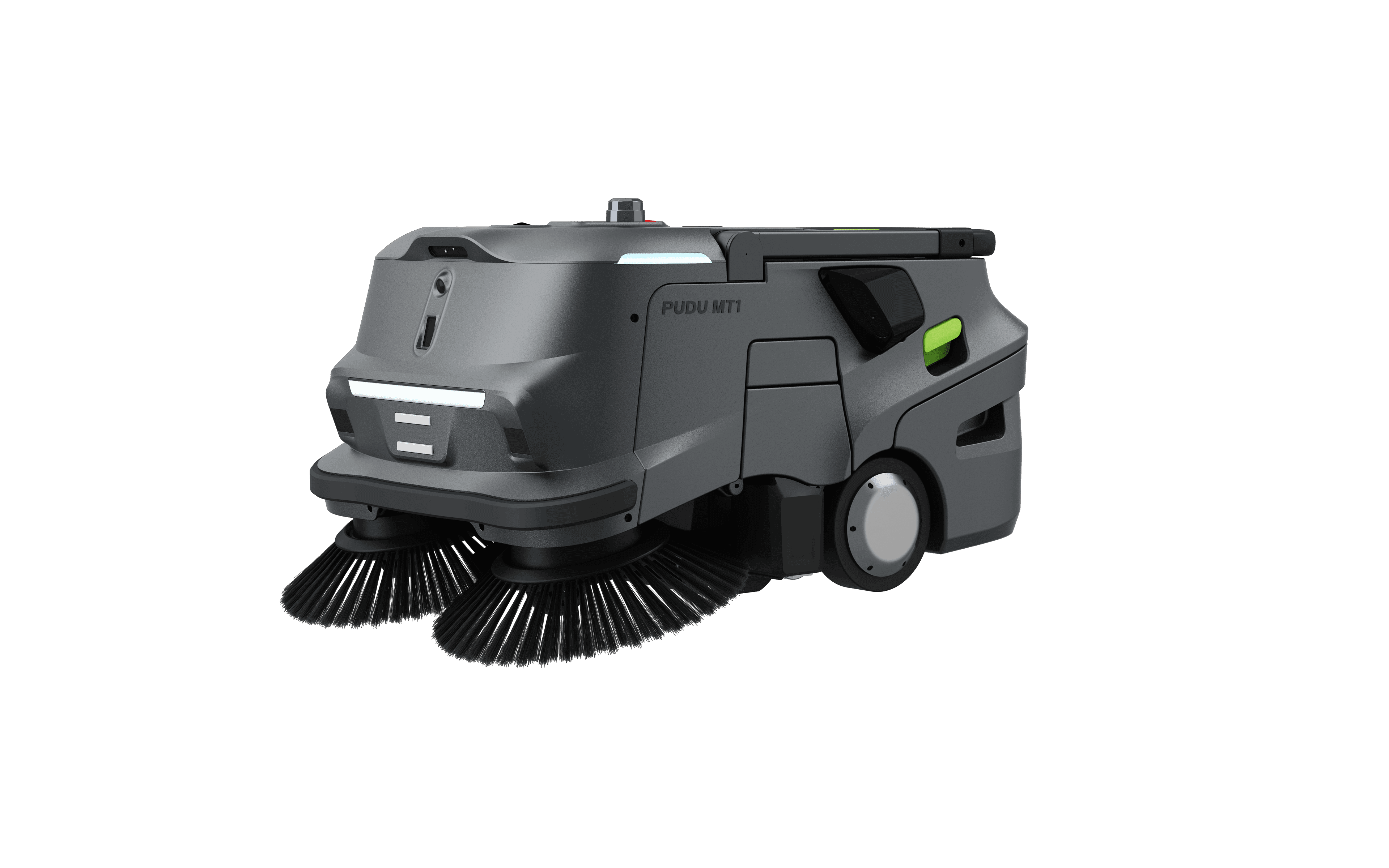
Ask "which brand is best?" and the honest answer is: none of them, everywhere. Our catalogue holds specs on 19 machines, 17 of which are autonomous and comparably priced. Put those 17 on one derated throughput basis and one AUD footing, ask how much capital buys one effective m²/h, and three different brands finish first across the four machine classes. And the gap that surprised us most isn't a machine difference at all: two robots at the identical A$32,832 differ 2.5× in annual cost, purely because of the terms we amortise them over.
A comparison is only worth the basis it runs on
Vendor spec sheets are not comparable documents. Some makers publish a practical coverage range; others one bold "up to" number that assumes a straight line and an empty floor. Untouched, those don't rank machines — they rank marketing departments.
So every throughput figure below takes the midpoint of the maker's rated coverage, then derates it × 0.6 — or × 0.45 where our catalogue records that figure as a theoretical maximum rather than a practical rate. No vendor's private fleet telemetry enters the ranking. When we size a real fleet, one further × 0.85 covers in-window duty, applied identically to everyone.
That rule doesn't fall evenly. The tighter × 0.45 hits seven machines — Gausium's Omnie, Mira, Marvel and Beetle Pro, and CenoBots' L3, L4 and L50 — and no PUDU machine. Partly that's real: PUDU mostly publishes conservative cover-mode rates, and the MT1 is listed at 1,800 m²/h, not the 6,000 m²/h its spot mode claims. Partly it's a judgement of ours that runs PUDU's way — the MT1 Vac's 1,400 m²/h is published as an "official max" and still takes the × 0.6. Read as a maximum it would sit at A$45.6 and lose the vacuum class outright.
Prices sit on one AUD ex-GST footing, but not one line of arithmetic. Twelve of the 17 are published US retail figures, converted and taken to 90%. Four Gausium models come from a retailer whose base configurations run ~20% under those figures, so we level them up first — an adjustment that only ever moves a Gausium price upward. PUDU's MT1 Max has no US listing and is priced from the Australian dealer card plus 5%. Four sources, three formulas: read any gap of a few percent below as a tie, not a result.
Indicative pricing. Every A$ figure here is an ex-GST estimate levelled onto a common footing from published list prices, not a quote. Real pricing moves with configuration, volume and support terms.
- Gausium — 8 models42%
- PUDU — 7 models37%
- CenoBots — 4 models21%
Every machine we hold specs for. Gausium lists the most models — 8 of 19, or 42% of the catalogue. Breadth is not the same question as which machine leads a class.
First question: can the brand even build what you need?
Before price, before throughput: does the vendor make an autonomous machine in your class at all? Only one of the three does, in all four.
| Class | PUDU | Gausium | CenoBots |
|---|---|---|---|
| Dry sweeper | MT1 · MT1 Max | Beetle Pro | — |
| Wet scrubber | — (SH1 is operator-pushed) | Scrubber 75P · Scrubber 50 Pro | L3 · L4 · L50 |
| Vacuum | MT1 Vac | Vacuum 40 | SP50 |
| Combo (sweep + scrub) | CC1 · CC1 Pro · BG1 | Phantas · Omnie · Mira · Marvel | — |
The empty scrubber cell catches buyers out. PUDU does list a machine that only washes — the SH1 — but it's an operator-pushed upright, not a robot: someone walks it the whole run, so it's excluded from every number here. Need an autonomous machine that only washes? Gausium or CenoBots. Want both in one pass? PUDU or Gausium.
Three entries come with a caveat: our catalogue can't fully confirm the CenoBots L50 and SP50 specs, and the PUDU BG1's manual isn't on file. No list we price from carries the BG1 either, so it appears in no chart below.
The capital-efficiency test
Indicative price ÷ derated coverage rate gives one comparable number: dollars of capital per effective m²/h owned. Here's each class leader.
PUDU MT1 and MT1 Vac, CenoBots L3, Gausium Mira. Indicative price ÷ (rated midpoint × 0.6, or × 0.45 where our catalogue records the figure as a theoretical maximum). Both PUDU leads are contested: at a uniform × 0.6 the Beetle Pro leads sweepers at about A$22, and read as the maximum PUDU calls it, the MT1 Vac falls to about A$45.6 behind the SP50. Shorter is better — and these are four different jobs, not four candidates for one job.
In three of the four classes the spread inside a class dwarfs the gap between the leaders. In vacuums PUDU's MT1 Vac at A$34.2 and the CenoBots SP50 at A$37.5 are close, while the Gausium Vacuum 40 at A$159.6 is 4.7× the leader. In scrubbers the L3's A$36.2 sits against the Scrubber 75P's A$208.2 — but the 75P is a 400 kg industrial machine sold into a different problem, which is why this metric shortlists rather than decides.
The exception is the sweeper class, and it's the one our own adjustments decide. On the basis above the MT1 leads at A$24.1 and Gausium's Beetle Pro sits at A$29.3 — a 22% gap. But both of the engine choices behind that gap land only on the Beetle Pro. Undo the × 0.45 derate and it leads at about A$22. Undo the +20% price levelling alone and it sits at A$24.4 — a 1.4% gap, which our own rule says to read as a tie. Sweepers are contested, not won.
Then the service window re-ranks the combo class
Sticker price is a snapshot; the term you amortise over is the cost. Our engine assumes 5 years for PUDU, 3 for Gausium, 2 for CenoBots. PUDU's five is a figure on an Australian distributor card that also lists a one-year included warranty, so even that leg needs confirming; the three and the two are our working assumption. Treat them as an input to challenge with your supplier, not a fact about the machines.
The combo class on the same derate rule as above — × 0.6 for the CC1, CC1 Pro and Phantas, × 0.45 for the Mira, Marvel and Omnie — divided by each brand's assumed term. That term is doing the ranking: held to one common 5-year term the Mira leads at about A$10.9 against the CC1's A$11.8. Shorter is better.
Across all four classes the assumed term changes the leader exactly once — here. The Gausium Mira wins on sticker efficiency at A$54.3 per m²/h against the PUDU CC1's A$59.0, and keeps that win at any term both brands share. It loses only when Gausium's three years is set against PUDU's five: A$18.1 to A$11.8. Nothing about either machine changed. Only the denominator did.
Push that to its cleanest form and you get the headline. The PUDU CC1 Pro and the CenoBots L3 carry the identical A$32,832 price — one a combo, the other a stand-alone scrubber — so the gap between A$6,566 and A$16,416 a year settles nothing between them. It shows how much of a "price" is really a term: if a quote doesn't say what you're covered for and for how long, you don't yet have one.
What the numbers still don't decide
- Water infrastructure. An auto-refill dock needs a water supply and a floor drain. The PUDU CC1 and CC1 Pro, Gausium Phantas, Omnie, Scrubber 50 Pro and Scrubber 75P dock that way; the PUDU SH1 and BG1, Gausium Mira and Marvel, and the CenoBots L3, L4 and L50 don't — someone fills and empties them by hand.
- Multi-floor autonomy. Only seven machines integrate with a lift: PUDU's MT1, MT1 Max and MT1 Vac, Gausium's Omnie and Scrubber 50 Pro, CenoBots' L4 and L50.
- Same rating, same size. The CC1 and CC1 Pro share one 700–1,000 m²/h rating, so they size identically — a fleet plan giving you fewer Pros than CC1s is wrong.
- 1 · Name the classYour floor and your soil decide it — sweeper, scrubber, vacuum or combo. Brands come after.
- 2 · Derate every spec the same wayRated midpoint × 0.6, or × 0.45 where the figure is recorded as a theoretical maximum. Same rule for every brand.
- 3 · Divide price by the derated rateCapital per effective m²/h ranks machines a spec sheet cannot.
- 4 · Ask what the term actually is5, 3 or 2 years reorders the list. Get the service window in writing.
Run it in that order and the vendor question mostly answers itself.
- Size the right class and see the payback on your own numbers with the Fleet & ROI Planner.
- Or tell us about your site and we'll come back with a vendor-neutral shortlist on this exact basis.
Frequently asked questions
- Which is better: PUDU, Gausium or CenoBots?
- No brand wins outright. On one uniform basis — rated coverage midpoint derated 40%, or 55% where our catalogue records the maker's figure as a theoretical maximum — and one AUD footing, PUDU's MT1 leads sweepers at about A$24 of capital per effective m²/h, PUDU's MT1 Vac leads vacuums at about A$34, CenoBots' L3 leads scrubbers at about A$36 and Gausium's Mira leads combos at about A$54. Both PUDU leads are contested: drop the tighter derate on Gausium's Beetle Pro and it leads sweepers at about A$22, and read the MT1 Vac's 1,400 m²/h as the maximum PUDU calls it and it falls to about A$45.6, behind the CenoBots SP50. Choose the class first, then the brand.
- Does any one brand make every type of cleaning robot?
- Only Gausium fields an autonomous machine in all four classes (sweeper, scrubber, vacuum, combo). PUDU has no autonomous stand-alone scrubber — its SH1 is an operator-pushed upright, not a robot. CenoBots builds scrubbers and one vacuum, but no sweeper and no combo.
- Why can a cheaper cleaning robot cost more per year?
- Because the term differs. The PUDU CC1 Pro and the CenoBots L3 carry the identical A$32,832 indicative price, ex-GST, but our engine amortises PUDU capital over 5 years and CenoBots over 2 — A$6,566 a year versus A$16,416, a 2.5× gap created by the term rather than the machine. PUDU's five years is a figure recorded on an Australian distributor card that also lists a one-year included warranty; the shorter windows are our engine's working assumption. Confirm both with your own supplier.
- How should you compare throughput across cleaning robot brands?
- Apply one derate to everybody: take the midpoint of the maker's rated coverage, multiply by 0.6, or by 0.45 where the published figure is recorded as a theoretical maximum rather than a practical rate, then by 0.85 for in-window duty when you size a fleet. Never rank one brand's measured fleet data against another brand's spec sheet.
- Are the PUDU CC1 and CC1 Pro different speeds?
- No. Both are rated 700–1,000 m²/h, so they derate to the same 510 m²/h and size identically. The Pro adds a fast spot-cleaning mode on top; what the extra A$2,736 buys is the mode, not a higher coverage rate.
Put these numbers to work
See which robot fits your facility and what it would save you.
Run the Fleet & ROI Planner