Are Autonomous Cleaning Robots Safe Around People? The Compliance Checklist
Obstacle avoidance, standards and liability for autonomous floor cleaners in Australia. What to verify about a machine like the PUDU MT1 before it runs around your staff — and the WHS questions to ask every vendor.
By WhichBot Team
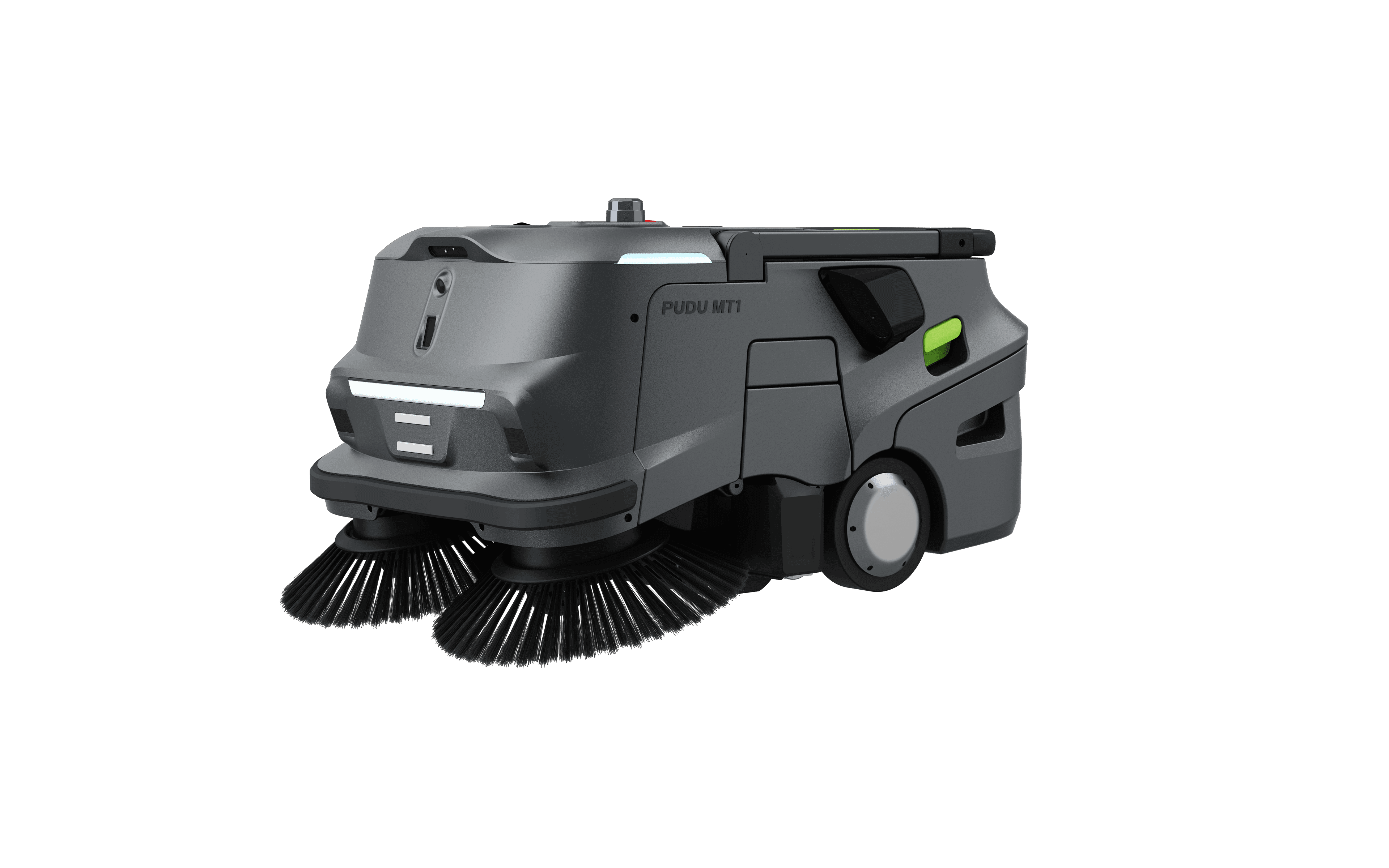
Autonomous floor cleaners can run safely around people when they're specified and supervised correctly — and not when they're not. Part of that is the machine: a robot like the PUDU MT1 tops out at 1.2 m/s, and our catalogue records the PUDU range as LiDAR + VSLAM navigation with 3D obstacle avoidance. The larger part is on you — the risk assessment, the signage, and knowing which questions to ask before you sign. Here's the checklist.
General information only — not legal or WHS advice. Work health and safety duties differ by state and by site. Confirm yours with your WHS regulator or a qualified adviser, and verify any machine's safety behaviour with the vendor's own documentation before you deploy it.
What the machine actually brings
The instinctive worry — a robot barrelling into a shopper — is the opposite of how commercial cleaners are built. Two things are genuinely published, and one is not:
- Slow by design. The MT1's top speed is 1.2 m/s (~4.3 km/h), below the typical adult walking pace of about 1.3–1.4 m/s. A 65 kg machine at walking pace carries a small fraction of the kinetic energy of anything on a forklift chassis. This one is a published spec.
- Sensing, in outline. Our catalogue records the PUDU range as LiDAR + VSLAM navigation with 3D obstacle avoidance — one line, applied across the range rather than measured per model. The intent is that a person, trolley or dropped box is detected before contact, not by a bumper after it. But note the level of detail: that is an outline of what is on board, not of how well it performs. No sensing coverage angle, no detection range and no stopping distance appear in any spec sheet we hold — so anyone quoting you a "360°" figure for this machine is quoting something else, and any claim about how the sensors are combined is a question for the vendor, not something we can confirm.
- What it does next is not published. How a given robot behaves after it detects a person — how hard it slows, whether it stops or steers around, what it does when it loses localisation — is not in any spec sheet we hold. Treat it as an open question for the vendor, covered in the checklist below.
The behaviour to specify before you buy
Detection is only step one. What the machine does after detection is what keeps a daytime deployment incident-free — and it is the part no brochure spec answers. Use this sequence as the acceptance test: ask each vendor to confirm every step in writing, then watch it happen on your own floor.
- DetectHow early, and with which sensors?
- SlowAt what distance does it ease off?
- Stop & waitDoes it hold if the path stays blocked?
- Re-routePlan around, or wait for clear? Which, when?
- LogIs the exception recorded and exportable?
That last step is worth pushing on: if a machine records its stops, blockages and coverage — and lets you export them — it feeds your due-diligence file every shift. Logging depth varies a lot between vendors, so confirm it rather than assuming it.
Noise is a safety factor too
Around people, how loud a machine runs decides when you can run it. Don't reason by class here. The quietest figure in our catalogue belongs to a dry vacuum-sweeper — the CenoBots SP50 at 58 dB, below every scrubber we hold a figure for — though that row is flagged unconfirmed, and the two loudest machines are also dry. The honest read is that the data is too thin to support a class rule in either direction, so check the published number model by model. Compare the actual published numbers, and match the machine and the hour to the space. If you're cleaning an occupied area in the daytime, a quieter unit earns its place; a 75 dB sweeper is better saved for after-hours logistics floors.
Every autonomous model we hold a published noise figure for — no brand omitted. Three carry a caveat and are labelled as such: the Phantas 60 dB is its quiet-mode rating, and the SP50 and L50 rows are flagged in our catalogue as unconfirmed. The PUDU figures carry no mode qualifier in the specs we hold. On the class question the evidence is thin and cuts both ways: the quietest entry is a dry vacuum-sweeper, but it is also the unconfirmed one, and the two loudest are dry sweepers. That is a reason to check model by model, not to adopt a class rule either way.
The standards landscape (and who's really liable)
In Australia your obligations start with work health and safety law — but check which Act actually applies to you, because it is not uniform. Most jurisdictions run the model law, but not under one name: it is the Work Health and Safety Act 2011 in the Commonwealth, NSW, Qld and the ACT, the Work Health and Safety (National Uniform Legislation) Act 2011 in the NT, and the WHS Act 2012 in South Australia and Tasmania. Western Australia adopted a modified version as its WHS Act 2020, and Victoria alone never adopted the model laws — it operates under the Occupational Health and Safety Act 2004, which frames the duty around the employer rather than a PCBU. Whichever applies, the principle is the same: the business conducting the work carries a primary duty of care that a robot cannot transfer. Buying an autonomous machine doesn't outsource your responsibility; it changes the job from pushing a mop to supervising a system.
On the product side, the standard actually written for this machine class is IEC 63327 (automatic floor treatment machines for commercial use), which covers autonomous operation and is applied alongside IEC 60335-2-72 (floor-treatment machines). Locally, AS/NZS 4024 is the machinery-safety series — voluntary unless a regulation or your contract calls it up. You may also see ISO 3691-4 cited — that one governs driverless industrial trucks, so it's adjacent rather than on-point for a floor cleaner. No single sticker proves a robot is "compliant" for your site: compliance is your risk assessment plus the machine's built-in safeguards, together.
The pre-purchase safety checklist
Skip the brochure adjectives. These are the questions that predict a safe deployment — ask every vendor the same list and compare the answers:
| Safety element | Why it matters | What to ask the vendor |
|---|---|---|
| People & obstacle detection | The robot must see and stop for a person, trolley or spill | Every vendor says "multi-sensor fusion" — push past it: what's the detection range, and what does each sensor cover on its own if one is blinded? |
| Speed & auto-slow | Slower travel means more reaction time and a shorter stop | What's the top speed, and does it slow automatically in busy zones? |
| Emergency stop | The WHS Regulations set requirements for emergency stop controls on plant (OHS Regulations 2017 in Victoria); the machinery-safety standards specify the control itself (AS/NZS 4024, IEC 60335-2-72 / IEC 63327) | Where is the e-stop, and can we halt it remotely from the app? |
| Mapping & exclusion | First mapping runs are the least predictable — cordon them | How do we cordon the area during mapping and first runs? |
| Fail-safe behaviour | "Lost or stuck" should mean stop, not guess | When it loses localisation, does it stop and wait or keep moving? |
| Records & audit | Incident and coverage logs prove due diligence | Can it log stops, blockages and coverage for our safety file? |
The honest takeaway
One thing about the MT1 is genuinely verifiable from a published spec: at 1.2 m/s it travels below walking pace. Don't generalise that to the category — the Gausium Omnie, Mira and Marvel are all rated to 1.4 m/s, at the top of it — so check the top speed model by model. One more thing follows from how these machines work rather than from any datasheet: an unattended machine doesn't get distracted or rush the last aisle at 2am. Everything else — how it reacts to a person, what it does when it gets lost, what it records — you have to make the vendor put in writing and show you.
And "the robot is safe" is only ever half the sentence. The other half is your risk assessment, your signage, and real human oversight — and how much of that your site needs is an output of your risk assessment, not of anyone's calculator.
If you want a starting point for an occupied daytime floor: shortlist on the published noise figure first (70 dB or quieter), confirm the top speed model by model, and make the response sequence above a written condition of sale.
- Size a right-fit fleet for your site with the Fleet & ROI Planner — it sizes on throughput and cost, and makes no compliance assessment.
- Or tell us about your site and we'll send a vendor-neutral shortlist with the published speed, noise and IP figures laid out — and the questions above ready to put to each vendor.
Frequently asked questions
- Are autonomous cleaning robots safe to run around people during the day?
- They can be, when they're specified and supervised correctly. Machines like the PUDU MT1 top out at 1.2 m/s — below average walking pace — and our catalogue records the PUDU range as LiDAR + VSLAM navigation with 3D obstacle avoidance. How the machine behaves after it detects someone is a vendor question, not a given: ask for it in writing and see it demonstrated. Either way the business keeps the workplace duty of care.
- What safety standards apply to cleaning robots in Australia?
- Your duty comes from work health and safety law, and which Act applies depends on your state — the WHS Act 2011 in the Commonwealth, NSW, Qld and the ACT; the Work Health and Safety (National Uniform Legislation) Act 2011 in the NT; the WHS Act 2012 in SA and Tasmania; the WHS Act 2020 in WA; and Victoria's own OHS Act 2004, which says 'employer' rather than 'PCBU'. On the product side, the standard written for this machine class is IEC 63327 (automatic floor treatment machines for commercial use), applied alongside IEC 60335-2-72; AS/NZS 4024 is the local machinery-safety series. Ask each vendor which of these they build and test to.
- What happens when a cleaning robot detects a person?
- That depends entirely on the machine, and it is one of the most important things to pin down before you buy. The behaviour you want is predictable — slow, stop, wait, and only resume or re-route when the path is genuinely clear — rather than swerving or pushing past. Ask the vendor to specify it in writing and demonstrate it on your floor.
- Does using a robot remove our liability for cleaning safety?
- No. The business conducting the work keeps the duty of care. A robot can strengthen your due-diligence record with consistent coverage and incident logs where the machine actually provides them — logging depth varies between vendors, so make it a purchase condition. Either way you remain responsible for the risk assessment, signage and supervision.
- How much supervision does an autonomous cleaner actually need?
- Our standing planning assumption is roughly 8 minutes of human attention per robot cleaning hour — for loading, refills, checks and clearing flagged exceptions. Treat that as a rule of thumb, not a safety threshold: the Fleet & ROI Planner costs whatever daily supervision figure you give it, and how much your site actually needs is an output of your own risk assessment. Either way it's supervising, not steering the machine.
Put these numbers to work
See which robot fits your facility and what it would save you.
Run the Fleet & ROI Planner