Scrubber, Sweeper or Vacuum? Picking the Wrong Class Costs 3.5× the Capital
There are four real classes of floor-cleaning robot — and 'disinfection' isn't one of them. Match the class to your surface and soil before you compare a single brand.
By WhichBot Team
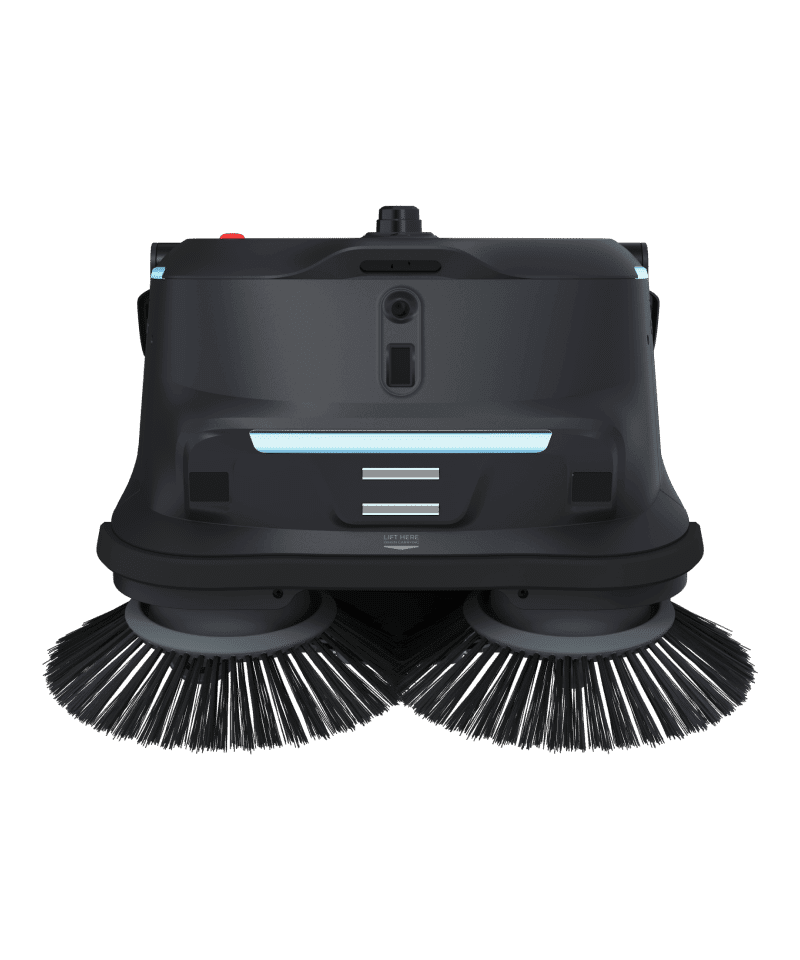
The most expensive mistake in buying a cleaning robot isn't picking the wrong brand. It's picking the wrong class. On the worked example below, a site that needed one dry sweeper and instead shortlisted a wet combo — same vendor, one class apart — ended up sizing three machines and 3.5× the capital, for a worse fit on the same floor.
Australia's staffing squeeze is pushing people to buy fast
Australia's commercial cleaning workforce is large, heavily casualised and notoriously hard to retain — and the sectors where the floor standard is non-negotiable, like healthcare, food manufacturing and logistics, are the ones that feel a missed shift hardest. When rosters won't fill, procurement moves quickly, and quickly is when the class error happens: someone buys the machine they saw in a demo video rather than the one their floor calls for.
There are only four classes
Strip away the marketing and every floor robot in our catalogue sits in one of four buckets. The bucket is decided by two things: what your floor is made of, and what kind of dirt lands on it.
| Floor & soil | Class you need | Why | Every machine we list in that class |
|---|---|---|---|
| Open hard floor, dry dust & debris | Dry sweeper | No water, no drain, no tank logistics | PUDU MT1 / MT1 Max · Gausium Beetle Pro |
| Hard floor, spills, grease, foot traffic | Wet scrubber | Soil is bonded — it must be washed off | Gausium Scrubber 75P / 50 Pro · CenoBots L3 / L4 / L50 |
| Carpet, or carpet + hard floor | Vacuum | Deep pile needs suction, not a disc brush | PUDU MT1 Vac · Gausium Vacuum 40 · CenoBots SP50 (hard floor only) |
| Both dry debris and spills | Combo | Sweeps and scrubs in a single pass | PUDU CC1 / CC1 Pro / BG1 · Gausium Phantas / Omnie / Mira / Marvel |
That's the whole autonomous catalogue, not a shortlist. The one omission is PUDU's SH1 — an operator-pushed upright rather than an autonomous robot.
Note what isn't in the table: disinfection. No floor robot in our catalogue is a disinfection machine, and none could deliver a UV-C dose at travel speed anyway — UV-C kills by dwell time, and a PUDU machine runs at up to 1.2 m/s. What a wet scrubber genuinely delivers is hygiene through removal: detergent, brush pressure, and a squeegee that lifts the soil and the water back off the floor. That's a real claim. "Our robot disinfects as it drives" isn't.
- Dry hard floor → sweeper45%
- Spill-prone hard floor → scrubber / combo27%
- Carpet & soft floor → vacuum18%
- Manual only (under racking, tight corners)10%
Illustrative split. Most sites are not one class — which is why the honest answer is often a small mixed fleet, and why ~10% of the floor stays a human job whatever you buy.
You cannot pick the class from the m²/h number
Here's the trap in reverse. Put every autonomous machine in the catalogue on the same footing — rated coverage, midpoint of any range, derated 40% (55% for a bold theoretical maximum) — and the classes don't rank. They overlap, almost completely.
Rated coverage (range midpoint) × 0.6 — or × 0.45 where the maker's published figure is a theoretical maximum rather than a practical rate — applied identically to PUDU, Gausium and CenoBots. CC1 and CC1 Pro share the same rating and so size identically. The CenoBots SP50 and L50 figures rest on specs our catalogue flags as unconfirmed — treat those two as indicative. Longer is faster.
The combo class alone runs from 315 to 1,633 m²/h — a 5.2× spread that swallows the entire sweeper class whole. The slowest combo is more than three times slower than the slowest sweeper. Knowing a machine's class tells you essentially nothing about its speed.
So throughput does exactly one job: it tells you how many units you need, once the class is settled. It says nothing about whether a machine can do your job at all. A 1,633 m²/h combo is still useless on carpet; a 1,458 m²/h sweeper still cannot lift grease.
What the wrong class actually costs
The site below is an illustrative composite, sized with the same engine that powers the Fleet & ROI Planner. Prices are indicative estimates, ex-GST.
A 6,000 m² distribution-centre floor: sealed concrete, dry dust and pallet debris, no standing spills, a 6-hour overnight window, and about 90% of the floor physically reachable by a robot (5,400 m² — the rest is under racking).
Same basis as the chart, plus one step: sizing adds a × 0.85 in-window duty for docking and transitions, so the MT1's 1,080 m²/h becomes 918 m²/h in a real window. Then runtime is checked against the window:
| Right class: PUDU MT1 (sweeper) | Wrong class: PUDU CC1 (combo) | |
|---|---|---|
| Effective in-window rate | 918 m²/h | 434 m²/h |
| Cleaning hours in a 6 h window | 6.0 h (6 h runtime covers it) | 5.6 h (5 h runtime, then part-charging) |
| Per-unit window capacity | 5,508 m² | 2,438 m² |
| Units needed for 5,400 m² | 1 | 3 |
| Indicative capital | A$25,992 | A$90,288 |
Same vendor, same floor, same window, same derate — about A$64,000 of avoidable capital, purely from crossing a class line. And the capital is the polite part of the bill. Three machines mean three sets of consumables and three units to supervise instead of one, and every auto-dock wet machine needs its dock plumbed to a water supply and a floor drain — which a logistics shed frequently does not have. The MT1 needs neither: dry sweeping has no tank to fill and no waste water to dispose of, just a 35 L dustbin to empty.
The unit count is machine-specific, not a universal wet-class rule: Gausium's heavy-duty Scrubber 75P on the same engine (536 m²/h, 5.5 cleaning hours, 2,945 m² per unit) needs 2 rather than 3 — but it's a 400 kg, 750 mm machine in another price bracket. The table is the like-for-like test: one vendor, one site, one class apart.
Run it the other way and the error is just as costly: a dry sweeper on a grease-spotted food-production floor will push debris around beautifully while the bonded, wet soil stays exactly where it was. You then buy the scrubber you needed first, and own two robots.
The order of operations
- 1 · Walk the floorHard, carpet, or both? Measure what a robot can actually reach.
- 2 · Name the soilDry dust and debris, or spills, grease and bonded soil?
- 3 · Pick the classSweeper · scrubber · vacuum · combo — before any brand names
- 4 · Then compare vendorsSame derate rule for everyone, then price and payback
Do it in that order and the brand comparison becomes easy, because you're comparing machines that can all actually do the job. Do it backwards — brand first, class second — and you'll get a very good robot that is very good at the wrong task.
- Size the right class for your floor with the Fleet & ROI Planner.
- Or tell us about your site and we'll come back with a vendor-neutral shortlist, class first.
Frequently asked questions
- What are the types of commercial cleaning robot?
- Four: dry sweepers (dust and debris on hard floors), wet scrubbers (washing hard floors), vacuums (carpet and soft floor), and combos that sweep and scrub in one pass. Everything else is a variant of these four.
- Should a warehouse buy a scrubber or a sweeper?
- If the soil is dry dust and pallet debris, buy a dry sweeper. On a 6,000 m² floor that is ~90% robot-reachable (5,400 m²) with a 6-hour window, one PUDU MT1 covers it, while the same brand's CC1 wet combo needs three units on the same basis — about 3.5× the capital, plus a water supply and floor drain a shed usually doesn't have.
- Do cleaning robots disinfect floors?
- Not the ones in our catalogue. Floor robots clean — they lift soil mechanically, and a wet scrubber's detergent-and-squeegee pass is what delivers a hygienic hard floor. UV-C disinfection needs dwell time on a surface, which a PUDU machine travelling at up to 1.2 m/s cannot provide.
- Can a floor scrubber clean carpet?
- Deep or soft pile needs suction, not a disc brush — that's the vacuum class. Within the PUDU MT1 family only the MT1 Vac is rated for carpet as well as hard floor; the CC1 and CC1 Pro combos are also carpet-rated, and Gausium's Vacuum 40 is the all-pile option.
- Can I pick a robot class by its m²/h rating?
- No — the classes overlap almost completely. On a uniform derated basis (rated midpoint × 0.6, or × 0.45 where the maker's figure is a theoretical maximum rather than a practical rate) the combo class alone spans 315 to 1,633 m²/h, which swallows the entire sweeper class. Throughput tells you how many units you need once the class is chosen; it never tells you whether a machine suits your floor.
Put these numbers to work
See which robot fits your facility and what it would save you.
Run the Fleet & ROI Planner